
You’re texting a friend. They tell you about their date last night. Then they type: “ngl there was a lot of PDA at the restaurant lol.” What does that mean?
PDA stands for Public Display of Affection. It’s one of the most common short forms used in texting, social media, and everyday talk. People use it to describe couples who hug, kiss, or hold hands in public.
You’ll see PDA pop up everywhere. Friends use it to gossip about couples. People use it on dating apps to set boundaries. Gamers and social media users use it as a joke or a warning. Even workplaces sometimes bring up PDA rules.
Knowing what PDA means helps you understand conversations faster. It also helps you use the term the right way, so you don’t sound confused or out of place. This guide breaks down everything about PDA: what it means, where it came from, how people use it, and how you should respond when someone brings it up.
Definition & Meaning

PDA means “Public Display of Affection.” It describes any physical affection between two people shown in a public place. This includes:
- Holding hands
- Hugging
- Kissing
- Cuddling
- Sitting on someone’s lap
- Any other physical touch that shows romantic or close affection
The key word is public. PDA only applies when other people can see it. Affection shown in private, like at home, is not called PDA.
People use the term casually. It’s not a rule or a law in most places. It’s more of a social idea. Some people are fine with lots of PDA. Others find it uncomfortable to watch or to do themselves.
Real-life examples of PDA in use:
Text message:
“Saw Jake and Mia at the mall being SO cute. Total PDA moment 😍”
Group chat:
“Can you guys tone down the PDA at dinner tonight? Grandma’s coming lol”
Social media caption:
“PDA alert 🚨 caught these two being adorable at the park”
Casual conversation:
Person A: “Did you see them kissing at the bus stop?” Person B: “Yeah, that’s a lot of PDA for a Monday morning.”
PDA can be used positively, as a cute observation, or negatively, as a complaint about too much affection in front of others. The tone depends on the situation and the people involved.
Background & History
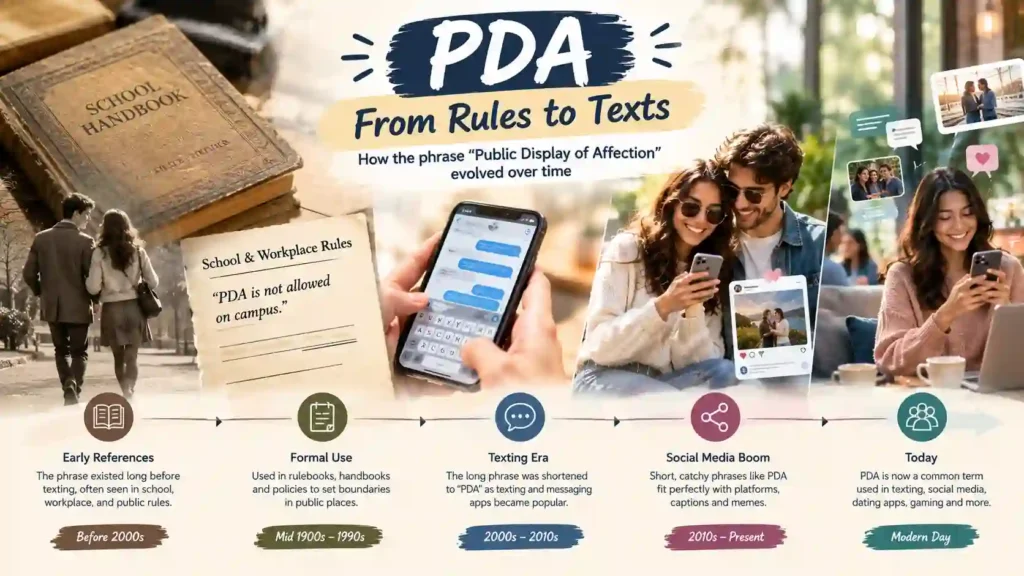
The phrase “public display of affection” has been around for decades. It became common in everyday English long before texting existed. Schools, offices, and even some public places used the phrase in rules and policies. For example, a school handbook might say, “PDA is not allowed on campus.”
As texting and messaging apps grew popular in the 2000s and 2010s, people started shortening long phrases into acronyms. “Public display of affection” became PDA, joining a long list of texting shortcuts like LOL, BRB, and OMG.
Social media sped up this change. Platforms like Twitter, Instagram, and TikTok made short, catchy phrases the norm. PDA fit perfectly. It was short, easy to type, and easy to understand.
Today, PDA is used in many settings:
- Texting and messaging apps, to describe or joke about couples
- Social media posts and captions, often paired with photos of couples
- Dating apps, where people state their comfort level with PDA
- Gaming chats, sometimes used jokingly between teammates
- Workplaces and schools, where PDA policies still exist
The meaning hasn’t changed much over time. What has changed is how often and where people use the term. It went from formal rulebooks to casual texts and memes. It’s now a normal part of internet slang, understood by almost everyone who uses a phone.
Usage in Various Contexts

PDA shows up in many different kinds of conversations. Here’s how people use it in each setting.
Texting
Friends often use PDA to describe something they witnessed or heard about.
“omg the new couple at work is SO PDA it’s kind of a lot”
“lowkey jealous of their PDA tbh, relationship goals”
Social Media
People use PDA in captions, comments, and hashtags, often lightheartedly.
Caption: “PDA szn is here 🥹❤️”
Comment: “the pda in this pic is sending me”
Gaming
In gaming communities, PDA is sometimes used as a joke between teammates who are dating or close friends.
Player 1: “Stop flirting in chat, this is PDA in a war zone lol”
Player 2: “Sorry sorry, focusing now 😂”
Casual Conversation
In spoken conversation, people use PDA the same way they’d use it in text, just out loud.
“Honestly, I’m not big on PDA. I’d rather keep that stuff private.”
“They’re always doing PDA at the coffee shop, it’s kind of sweet actually.”
Dating Apps
People often mention their PDA preferences directly in their profile or early conversations.
“Fair warning, I’m not really into PDA. More of a private affection person.”
“I love PDA, hope you’re not shy 😄”
Professional or Formal Settings
PDA is rarely used casually at work, but it can come up when discussing workplace conduct.
“HR sent a reminder about the PDA policy after the holiday party.”
Across all these contexts, the core meaning stays the same. What changes is the tone: playful in texting and social media, cautious in professional settings, and personal on dating apps.
Common Misconceptions & Clarifications
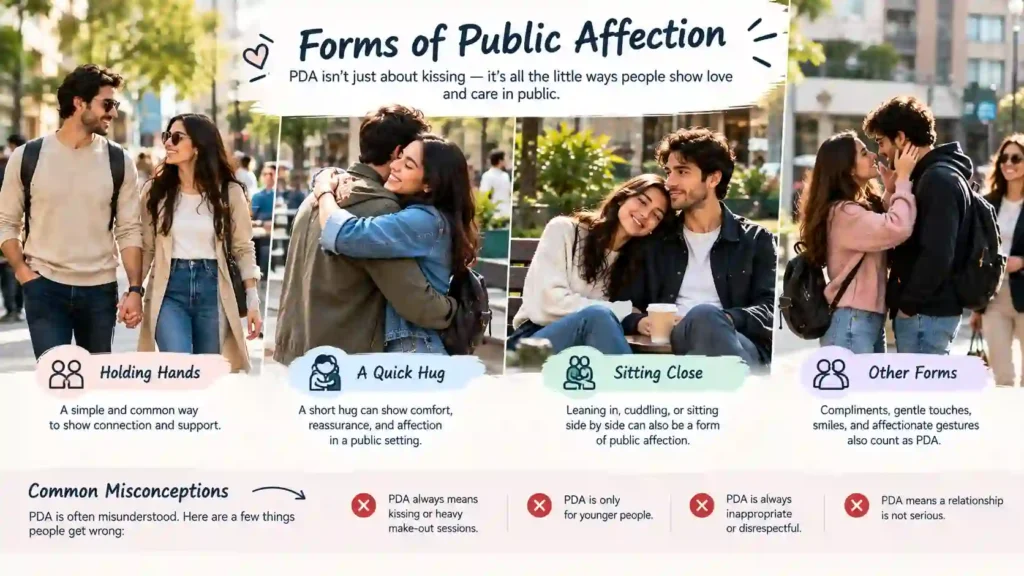
Some people confuse PDA’s meaning or misuse it. Here are the most common mix-ups.
Misconception 1: PDA always means kissing. Not true. PDA covers any physical affection in public, not just kissing. Holding hands or a hug counts too.
Misconception 2: PDA is always negative. PDA is not automatically a complaint. Many people use it to describe something sweet or cute. Tone and context decide whether it sounds positive or critical.
Misconception 3: PDA has one strict definition everyone agrees on. Comfort levels vary a lot. What one person sees as normal PDA, like holding hands, another might see as too much. There’s no fixed rule for what counts as “too far.”
Misconception 4: PDA is only for romantic couples. Most of the time, yes, PDA refers to romantic affection. But some people use it jokingly for close friends or family being affectionate in public, even without romance involved.
Is PDA ever inappropriate?
The term itself is not offensive. But the behavior it describes can be seen as inappropriate depending on the setting. Excessive PDA at work, school, or in front of family can make people uncomfortable. This is why some places have PDA guidelines.
Can PDA mean something else?
In tech and business, PDA also stands for Personal Digital Assistant, an older term for early handheld devices. This meaning is mostly outdated now, replaced by smartphones. In modern texting and social media, though, PDA almost always means Public Display of Affection. Context makes the meaning clear.
Similar Terms & Alternatives
Several other terms describe similar ideas to PDA. Here’s how they compare.
| Term | Meaning | Common Use |
| PDA | Public Display of Affection | Texting, social media, casual talk |
| DPDA | Deliberate PDA (done on purpose, often to show off) | Social media, jokes |
| Lovey-dovey | Overly affectionate or sweet behavior | Casual conversation |
| Clingy | Excessive attachment, not always physical | Casual talk, sometimes negative |
| Couple goals | Admiring a couple’s relationship, not always physical affection | Social media captions |
| All over each other | Informal phrase for excessive physical affection | Casual, spoken conversation |
Examples in use:
“They’re so lovey-dovey, it’s actually adorable.”
“That’s couple goals honestly, not even PDA, just cute.”
“They were all over each other at the party, way more than usual PDA.”
These terms overlap with PDA but carry different shades of meaning. “Couple goals” is usually a compliment about the relationship itself, not just physical touch. “Clingy” can apply even without any public affection. PDA stays the most specific and widely recognized term for physical affection shown in front of others.
How to Respond to This Term
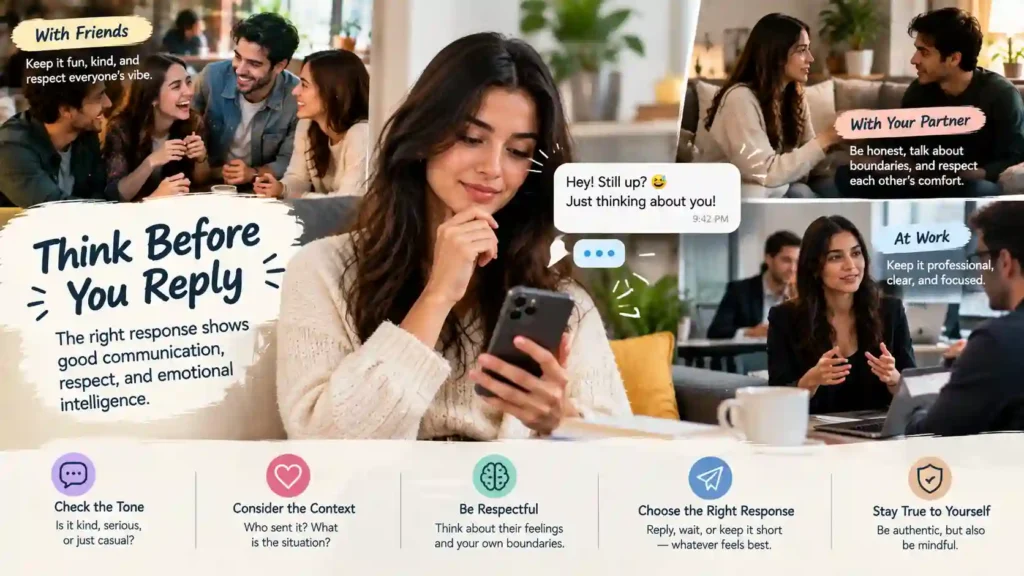
How you respond to “PDA” depends on the situation and your relationship with the person texting you.
Casual response:
“Lol yeah they were being so cute, total PDA moment.”
Funny response:
“PDA level: 100. Someone get them a room 😂”
Professional response: If PDA comes up at work, keep it brief and neutral.
“Noted, I’ll make sure to follow the office guidelines on that.”
Privacy-conscious response: If you don’t want to share details or discuss someone’s affection publicly.
“Not really my business to comment on, but glad they’re happy.”
If someone says they’re not into PDA:
“Totally get it, we can keep things low-key in public.”
If you’re setting your own PDA boundary:
“Just so you know, I’m not big on PDA. I’d rather show affection more privately.”
Matching your tone to the conversation matters. A joke works well with friends. A neutral, respectful response works better at work or with someone you just met.
Regional or Cultural Differences
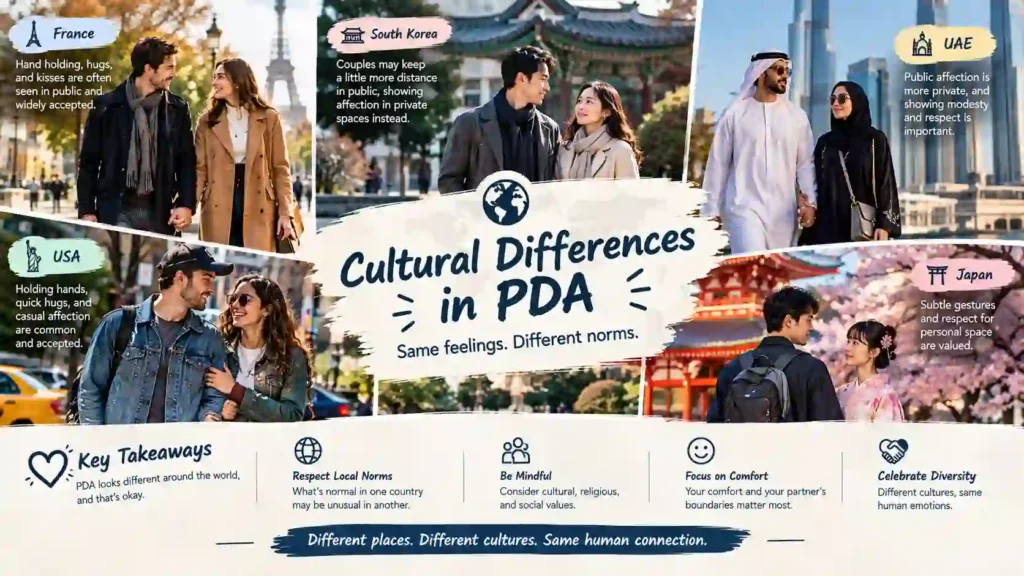
PDA as a term is mostly an English-language phrase, but the idea behind it exists everywhere. Comfort with public affection varies a lot by culture.
Western countries (US, UK, Canada, Australia): PDA is common and often accepted, though comfort levels still vary by family and personal preference. The term itself is widely used in texting and social media.
Parts of Asia (Japan, South Korea, parts of India): Public affection is often more reserved. Holding hands may be common, but kissing in public is less accepted in many communities. The English term “PDA” is still recognized, especially among younger, internet-savvy people.
Middle East and some conservative regions: Public affection is often limited or discouraged, especially in more traditional settings. Local slang may replace or avoid using “PDA” directly.
Latin America and Southern Europe: Public affection tends to be more openly accepted and common, though the term “PDA” itself is still mostly used in English-speaking or online contexts.
Regional slang variations:
- In some English-speaking countries, people say “getting cozy” instead of PDA.
- In casual British slang, “snogging in public” describes kissing specifically.
- Some online communities shorten it further to just “PDA-ing” as a verb, like “they were PDA-ing at the mall.”
While the term “PDA” started in English, its short, catchy format has made it spread into casual online use across many countries, especially among younger internet users who mix English slang into their own language.
Comparison with Similar Terms
Here’s a closer look at how PDA compares to related expressions people often confuse or mix up.
| Term | Focus | Public or Private | Tone |
| PDA | Physical affection (hugs, kisses, hand-holding) | Public only | Neutral, can be positive or critical |
| Flirting | Playful romantic interest, not always physical | Either | Playful, light |
| Clinginess | Emotional dependence, needing constant attention | Either | Often negative |
| Intimacy | Deep emotional or physical closeness | Usually private | Positive, personal |
| Making out | Intense kissing | Either | Informal, sometimes crude |
Key differences:
PDA is specifically about being seen. Flirting can happen through text with no one else watching. Intimacy usually refers to private closeness, the opposite of PDA. “Making out” describes a specific act, while PDA covers a broader range of affectionate behavior.
Understanding these differences helps you use the right word. If someone says “stop the PDA,” they mean stop showing affection in front of others, not stop the relationship or the feelings themselves.
Usage in Online Communities & Dating Apps

PDA comes up often in online spaces, especially where relationships and dating are discussed.
Dating apps (Tinder, Bumble, Hinge): People often mention their PDA comfort level directly in their bio or early chats. This helps set expectations before meeting in person.
Profile bio: “Big on PDA, hope that’s your vibe too 😄”
Match chat: “Just so you know, I’m more reserved with PDA in public. Hope that’s cool.”
Twitter/X: PDA is often used in a joking or observational way, especially around celebrity couples or viral videos.
“The PDA at the airport just now was unreal, they could not keep their hands off each other 😂”
Instagram/TikTok: Couples often caption their posts with PDA-related phrases, embracing the term positively.
Caption: “PDA king and queen 👑❤️”
Gaming communities: PDA is used jokingly when two players who are dating show affection in voice or text chat during gameplay.
“Bro stop being cute in chat, this is ranked, not a date 😂 too much PDA rn”
Tips for responding appropriately online:
- If someone states their PDA preference on a dating app, respect it. Don’t push back or joke about it dismissively.
- On social media, keep comments about PDA light and kind. Avoid harsh judgment of couples.
- In gaming chats, keep PDA jokes friendly. What’s funny to you might feel embarrassing to someone else.
Online spaces move fast, and tone can be hard to read through text. When in doubt, keep your response light, respectful, and short.
Hidden or Offensive Meanings
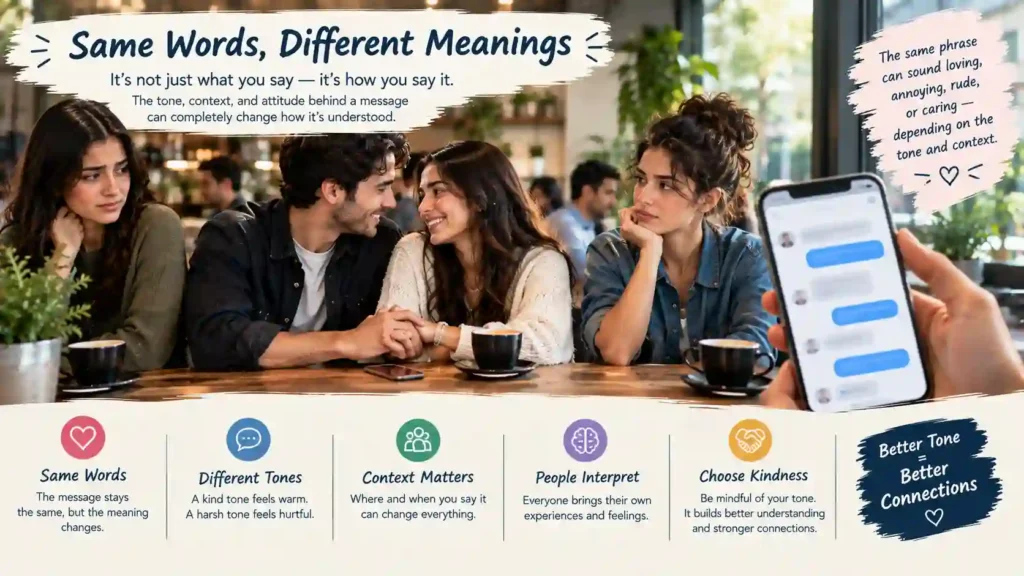
PDA itself is not an offensive term. It’s a neutral acronym describing physical affection in public. However, there are a few things worth knowing.
Context can change the tone. Saying “ew, so much PDA” can come across as judgmental or rude, especially if said about a specific couple nearby. The words are the same, but tone and intent shape how it lands.
It can be used to shame people. Some people use “PDA” critically to police how others express affection, especially LGBTQ+ couples who may already face judgment for public affection that straight couples wouldn’t be questioned for. Using the term this way can come across as insensitive or discriminatory, even if that’s not the intent.
It can also be used kindly. Most of the time, PDA is used lightly, as a fun observation or a personal boundary statement, not as an insult.
Why tone and context matter:
The same three letters can sound sweet, funny, judgmental, or dismissive depending on how they’re used. “Aw, they’re so PDA, it’s cute” reads very differently from “ugh, stop with the PDA, it’s gross.” Always consider who might read or hear your message and how it could be taken.
There is no secret or hidden offensive meaning behind PDA in typical texting and social media use. The only alternate meaning, Personal Digital Assistant, is outdated tech terminology and rarely causes confusion in casual conversation.
Suitability for Professional Communication

PDA, in its “Public Display of Affection” meaning, is not appropriate for formal or professional communication. It’s a casual slang term, best kept for texting, social media, and informal talk between friends.
In a professional setting, using PDA casually can come across as unprofessional or out of place, especially in emails, reports, or meetings.
When PDA-related topics might come up at work:
- HR policies about workplace conduct
- Reminders about appropriate behavior at company events
- Discussions about office culture and boundaries
Professional alternatives to use instead of “PDA”:
- “Public displays of affection” (spelled out fully, in formal writing)
- “Physical affection in the workplace”
- “Appropriate workplace conduct”
Example of a professional message:
“As a reminder, please be mindful of physical affection between colleagues during company events, in line with our workplace conduct guidelines.”
Compare that to a casual text:
“lol did you see the PDA at the office party 😂”
Both describe similar behavior, but the tone and word choice completely change based on the setting. Save the slang term “PDA” for casual conversations, and spell things out fully in professional writing.
FAQs
1. What does PDA mean in texting? PDA stands for “Public Display of Affection.” It describes physical affection, like hugging or kissing, shown in front of other people.
2. Is PDA always about romantic couples? Usually, yes. PDA typically refers to romantic affection, though it’s occasionally used jokingly for close friends or family.
3. Does PDA have a negative meaning? Not by default. PDA can be used positively, as a sweet observation, or critically, as a complaint. Tone and context decide the meaning.
4. Can PDA mean something other than “Public Display of Affection”? Yes, it can also stand for “Personal Digital Assistant,” an older tech term. In modern texting, though, it almost always means Public Display of Affection.
5. Is it okay to use PDA in a work email? No, it’s best to spell out “public displays of affection” in professional writing instead of using the slang short form.
6. How do I tell someone I’m not comfortable with PDA? Be direct and kind. Something like, “I’m not really into PDA, I’d rather keep things private,” works well.
7. Is PDA used the same way in every country? No, comfort with public affection varies by culture. The term “PDA” is mostly used in English-speaking and online spaces, though the concept exists everywhere.
Conclusion
PDA means “Public Display of Affection.” It’s a simple, widely used term for physical affection, like hugging, holding hands, or kissing, shown in public. You’ll see it in texts, social media captions, dating app bios, and even casual conversations at work or school.
The term itself is neutral. Its tone depends entirely on context, who’s using it, and how. It can describe something sweet, something funny, or something someone wants less of.
Understanding PDA helps you follow conversations naturally and respond the right way, whether you’re texting a friend, chatting on a dating app, or setting a boundary about your own comfort level. Now that you know what it means and how it’s used, you’ll never be confused by that text again.
Discover More Article

Hi, I’m Mahgull, a dedicated content writer with 2 years of experience in the meaning niche. I enjoy turning complex words, slang, abbreviations, and phrases into simple, informative content that helps readers understand their meanings clearly and quickly.








1 thought on “PDA Meaning in Text: What It Really Stands For <p class="post-updated-date">🕓 <span class="updated-label">Last updated on</span> <time datetime="2026-09-20T05:58:39+00:00">September 20, 2026</time></p><script type="application/ld+json"> { "@context": "https://schema.org", "@type": "BlogPosting", "mainEntityOfPage": { "@type": "WebPage", "@id": "https://outreachnexa.com/pda-meaning-in-text/" }, "datePublished": "2026-09-15T14:25:44+00:00", "dateModified": "2026-09-20T05:58:39+00:00" } </script>”