You’re texting a friend, and they reply with just one word: “obv.” No punctuation, no explanation, just three letters that somehow say a lot.
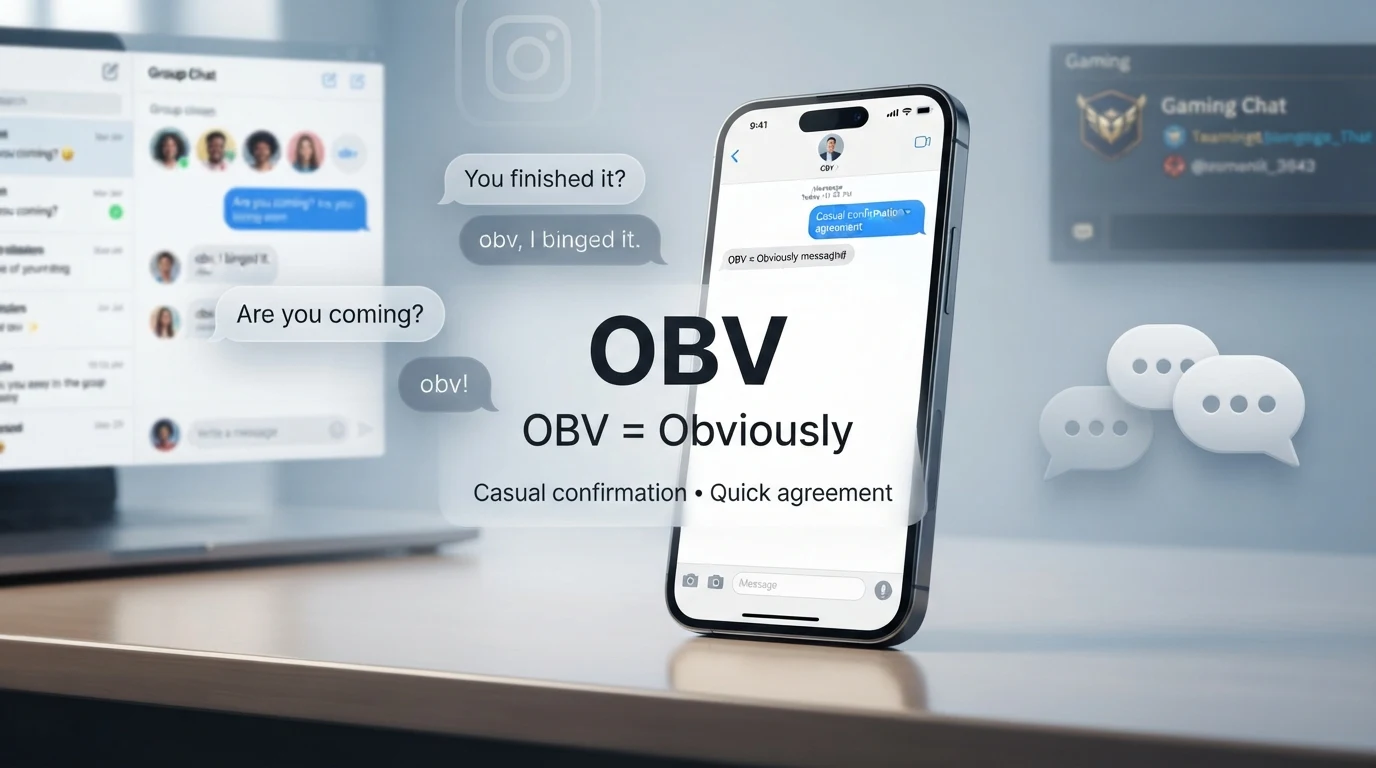
“Obv” is short for “obviously,” and it’s one of the most common shorthand terms used in modern texting. You’ll spot it in casual chats, social media comments, gaming lobbies, and group threads. It’s quick, effortless, and gets the point across without wasting keystrokes.
Understanding “obv” matters because texting culture runs on efficiency. Knowing when and how to use abbreviations like this helps you sound natural instead of robotic or overly formal. It also helps you avoid confusion, since tone can be hard to read in short text-based replies. This guide breaks down everything about “obv” where it came from, how people use it today, and when you should (or shouldn’t) use it yourself.
Definition & Meaning
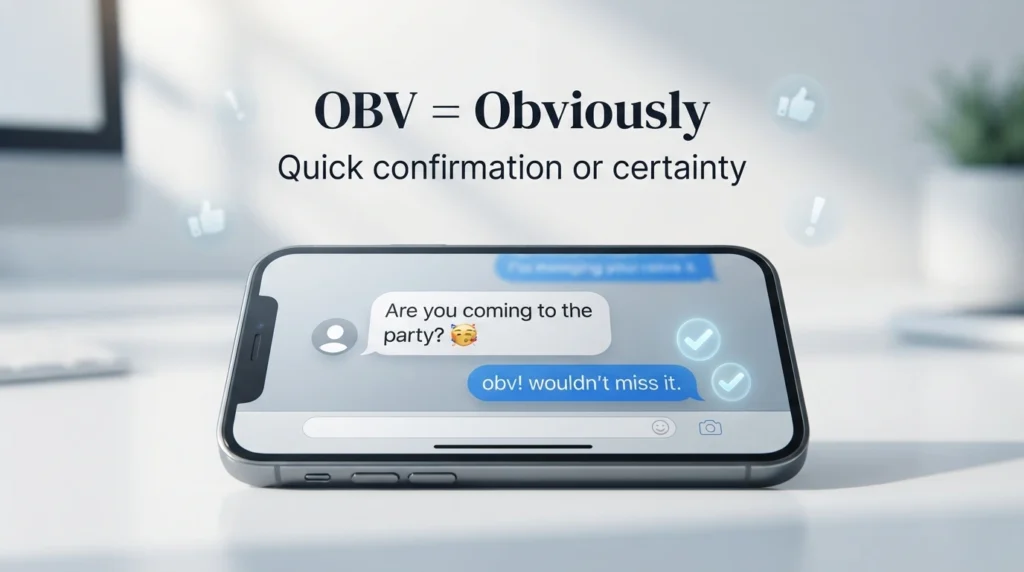
“Obv” is a shortened form of the word “obviously.” It’s used to confirm something that seems clear, expected, or self-evident. Instead of typing out the full word, people shorten it for speed and casual tone.
Example in dialogue:
Friend: are you coming to the party tonight?
You: obv, wouldn’t miss it
Here, “obv” replaces “obviously” to confirm something without sounding overly formal.
It’s also used to react to something that seems like common sense:
Friend: did you finish the show already?
You: obv
In this case, “obv” adds a light, slightly playful tone, implying “of course, that’s a given.”
Sometimes it’s used sarcastically, to point out something painfully clear:
Friend: wait, is it raining outside?
You: obv 🙄 look out the window
Here, “obv” carries a mild eye-roll energy, similar to saying “duh.”Overall, “obv” works as a quick confirmation word that fits naturally into casual texting, letting people communicate agreement or certainty without slowing down the conversation.
What Is the Full Form of OBV?
“The full form of OBV in texting is ‘obviously.’ It is a shortened spelling used in informal messages, comments, and online conversations.”
Background & History
The word “obviously” has been part of the English language for centuries, but its shortened form, “obv,” became popular with the rise of texting and instant messaging in the early 2000s. As phones had limited character counts and typing was slower on early keypads, people began abbreviating common words to save time.
By the 2010s, “obv” had become a staple of casual online communication, especially among younger users on platforms like AIM, MSN Messenger, and later, SMS and social media apps. It fit naturally into the broader trend of internet shorthand, alongside terms like “brb,” “lol,” and “idk.”
As smartphones became standard and typing got faster, “obv” didn’t disappear. Instead, it became a stylistic choice rather than a necessity. People still use it today because it feels casual, quick, and expressive even though full keyboards make typing “obviously” just as easy.
Now, “obv” is common across texting, social media captions, comments, and even light workplace chats among coworkers who have a casual relationship. It represents a shift in language where efficiency and tone often matter more than full grammatical correctness.
Usage in Various Contexts
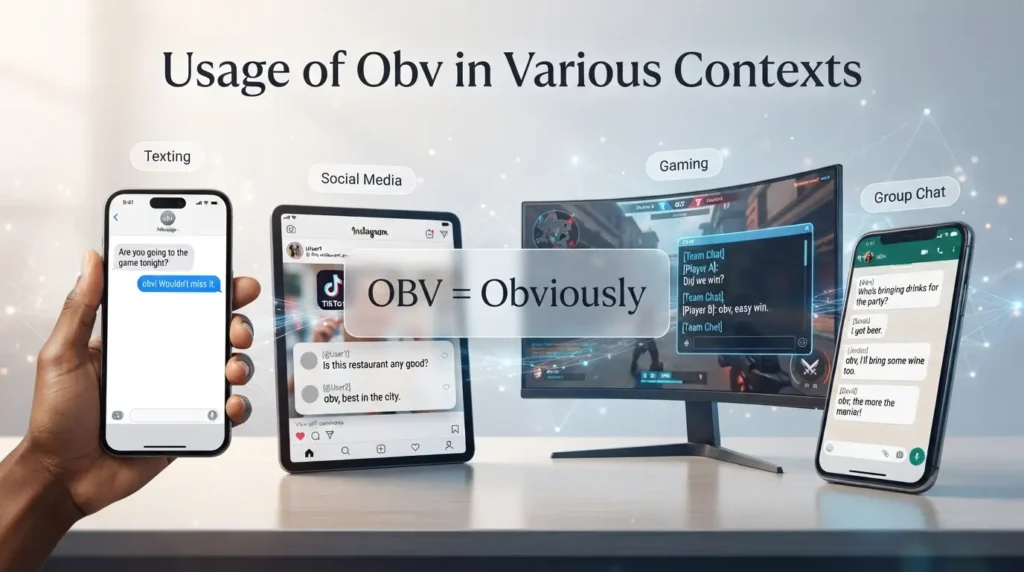
The word “obv” adapts easily across different types of conversations.
In Texting
Her: are you still coming over later?
You: obv, see you soon
In Social Media Comments
Under a post showing an obvious achievement, someone might comment: “obv! you worked so hard for this 🎉”
In Gaming Communities
Teammate: should we take the objective now?
You: obv, let’s go
In Casual Group Chats
Friend 1: is pizza still happening tonight?
Friend 2: obv, when has that ever changed
In each case, “obv” adds a casual, confident tone, confirming something without over-explaining. It works best in relaxed, informal conversations where a short response feels natural rather than dismissive.
On Instagram: “That outfit looks amazing.” “Obv 🔥”
On Snapchat: “Are we still meeting later?” “Obv!”
On WhatsApp: “You’re bringing snacks, right?” “Obv 😂”
Common Misconceptions & Clarifications
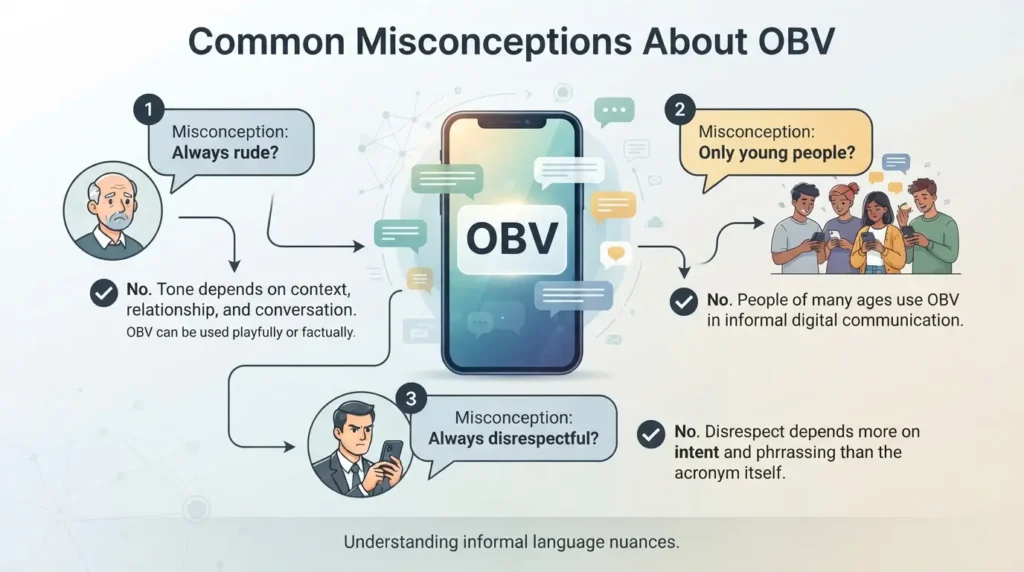
One common misconception is that “obv” always sounds sarcastic or rude. In reality, tone depends heavily on context and relationship.
Misconception 1: It always implies annoyance.
Not true. Between close friends, it usually just means quick agreement, without any negative undertone.
Misconception 2: It’s only used by younger generations.
While it’s popular in casual youth texting culture, adults use it too, especially in relaxed personal conversations or with close coworkers.
Misconception 3: It’s disrespectful in every context.
It can come across as short or dismissive if used with someone you don’t know well, or in a serious conversation. Context and familiarity matter a lot here.
Clarification: The tone of “obv” shifts based on:
- The relationship between the people texting
- The topic being discussed
- Whether it’s paired with a laughing emoji, a straightforward reply, or dry punctuation
Used with friends in relaxed settings, it’s simply a quick, confident confirmation. Used with strangers or in formal settings, it can feel abrupt or slightly rude.
Similar Terms & Alternatives
Several other words and phrases carry a similar meaning to “obv.” Here’s how they compare:
| Term | Meaning | Tone |
| Obv | Shortened “obviously” | Casual, quick |
| Duh | Something painfully clear | Sarcastic, blunt |
| Of course | Full confirmation | Neutral to warm |
| No doubt | Strong agreement | Confident |
| Totally | Enthusiastic agreement | Friendly, upbeat |
| For sure | Casual confirmation | Relaxed |
While these terms overlap in meaning, “obv” stands out for being shorter and more casual, making it ideal for fast-paced texting rather than spoken conversation or formal writing.
How to Respond to This Term

If someone texts you “obv,” your response should match the tone of the conversation.
Casual Response
“haha true, obv”
Playful/Funny Response
“well when you put it that way… obv”
Professional Response (in relaxed workplace chats)
“Got it, makes sense.”
Privacy-Conscious Response (if you want to keep things simple)
“Yep, agreed.”
If “obv” feels sarcastic or dismissive in a specific context, you can gently clarify:
“haha fair enough, just wanted to double check”
Matching tone is key. In lighthearted chats, playing along keeps the conversation smooth. In more serious conversations, a straightforward reply works better than mirroring the casual tone.
Regional or Cultural Differences
“Obv” is primarily used in English-speaking countries, especially in casual texting culture.
- United States: Extremely common in everyday texting, social media, and youth culture.
- United Kingdom: Used similarly, though sometimes paired with dry humor or sarcasm.
- Australia: Common in casual conversations, often shortened even further in slang-heavy texting styles.
- Non-English-speaking regions: While “obv” isn’t a direct part of most non-English languages, English internet slang like this often gets adopted into casual texting among younger, bilingual users worldwide, especially in urban or online communities.
The core meaning stays consistent across regions confirming something obvious but the tone can shift from playful to sarcastic depending on local texting habits and humor styles.
Comparison with Similar Terms
To clarify how “obv” differs from similar expressions:
| Expression | Primary Use | Can Sound Sarcastic? | Formality Level |
| Obv | Quick confirmation | Sometimes | Very casual |
| Duh | Pointing out the obvious | Often | Very casual |
| Of course | Polite confirmation | Rarely | Neutral |
| No doubt | Strong agreement | Rarely | Casual to neutral |
| Totally | Enthusiastic agreement | Rarely | Casual |
The key difference is that “obv” is more abbreviated and informal, making it perfect for text-based conversations, while alternatives like “of course” fit better in spoken or slightly more formal contexts.
Usage in Online Communities & Dating Apps

On dating apps like Tinder, Bumble, or Hinge, “obv” often appears in playful exchanges to confirm shared interests or plans.
Example:
Match: so you’re a coffee person too?
You: obv, can’t function without it
On Twitter/X, “obv” frequently shows up in replies or captions to confirm something that seems self-evident, often paired with humor.
In gaming communities, especially voice or text chat, “obv” is used to quickly confirm strategies or decisions without slowing down gameplay.
Tips for responding appropriately:
- On dating apps, use “obv” to keep the tone light and confident, especially when confirming shared interests.
- In social media replies, it works well for quick, friendly agreement.
- In gaming chats, it’s ideal for fast confirmations during active gameplay.
Hidden or Offensive Meanings
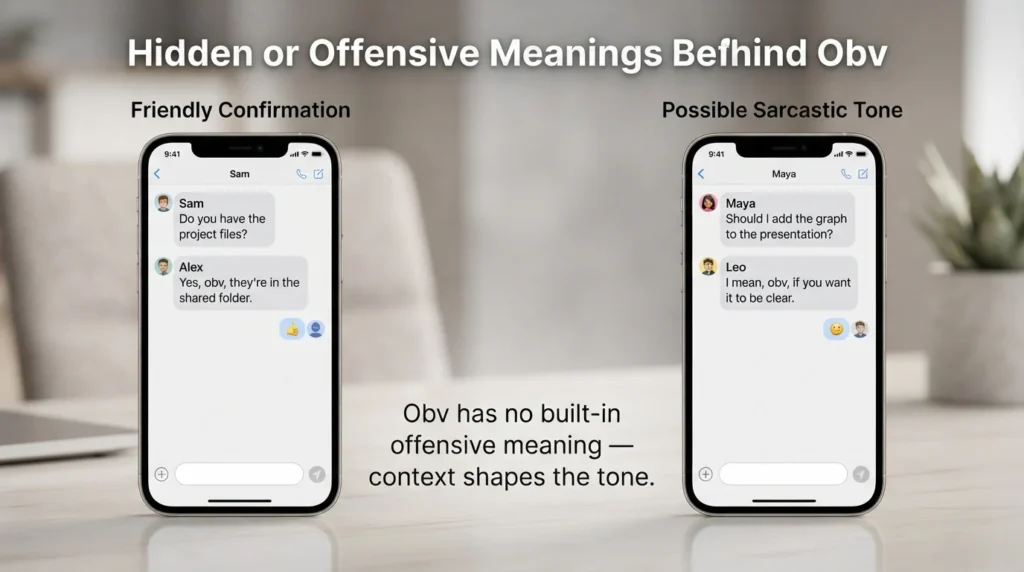
For the most part, “obv” is harmless and casual. However, context can shift its tone:
- Sarcastic undertone: When used dismissively, it can imply someone thinks a question was unnecessary or annoying.
Friend: wait, are you upset about that?
You: obv
This could come across as slightly short or frustrated, depending on the situation.
- Dismissive tone in serious conversations: Using “obv” in a moment that requires empathy or explanation can feel cold or uninterested.
Why tone and context matter: Since “obv” has no built-in negative meaning, its interpretation depends entirely on the conversation’s emotional weight. In lighthearted chats, it’s simply efficient. In serious or sensitive conversations, it can unintentionally feel abrupt.
Suitability for Professional Communication
“Obv” is not appropriate for formal business communication, such as client emails, official documents, or messages to senior leadership. It reads as too casual and can seem unprofessional.
However, in relaxed internal workplace chats among close coworkers, it may be acceptable for quick, informal confirmations.
Professional alternatives:
- “Of course.”
- “Absolutely.”
- “That makes sense.”
- “Understood.”
If you’re unsure about the formality of a conversation, it’s safer to use full words rather than casual abbreviations like “obv.”
FAQs
1. What does “obv” mean in texting?
It’s short for “obviously,” used to confirm something that seems clear or expected.
2. Is “obv” rude to use?
Not usually. It only feels rude if used dismissively in a serious or sensitive conversation.
3. Can “obv” be used in professional settings?
It’s best avoided in formal communication, but may be fine in relaxed workplace chats with close colleagues.
4. Is “obv” only used by younger people?
No, it’s common across many age groups, especially in casual texting.
5. What’s the difference between “obv” and “duh”?
“Obv” is a neutral shorthand, while “duh” often carries a more sarcastic or blunt tone.
6. Does “obv” mean the same thing everywhere?
The core meaning stays consistent, though tone can vary slightly by region and personal texting style.
7. How should I respond if someone says “obv” to me?
Match their casual tone with a light reply, or ask for clarification if the context feels unclear.
8.What Does OBV Mean on Instagram or Snapchat?
OBV means “obviously” on Instagram and Snapchat. People use it in messages, comments, and snaps to show agreement or say something is clear.
Conclusion
“Obv” is a simple, efficient way to confirm something obvious without over-explaining. It’s widely used across texting, social media, gaming, and casual conversations, making it a staple of modern digital communication.
While it’s not suited for formal settings, it fits naturally into relaxed, everyday conversations. Understanding how tone and context shape its meaning helps you use it confidently and interpret it correctly when someone sends it to you.

Hello, I’m Insha, a passionate content writer with 2 years of experience creating clear, engaging, and helpful content. I specialize in the meaning niche, explaining words, slang, phrases, and online terms in simple language that readers can easily understand and use.