You share some good news with a friend, and they reply with “isg!” Just three letters, but the enthusiasm is clear. What does it mean?
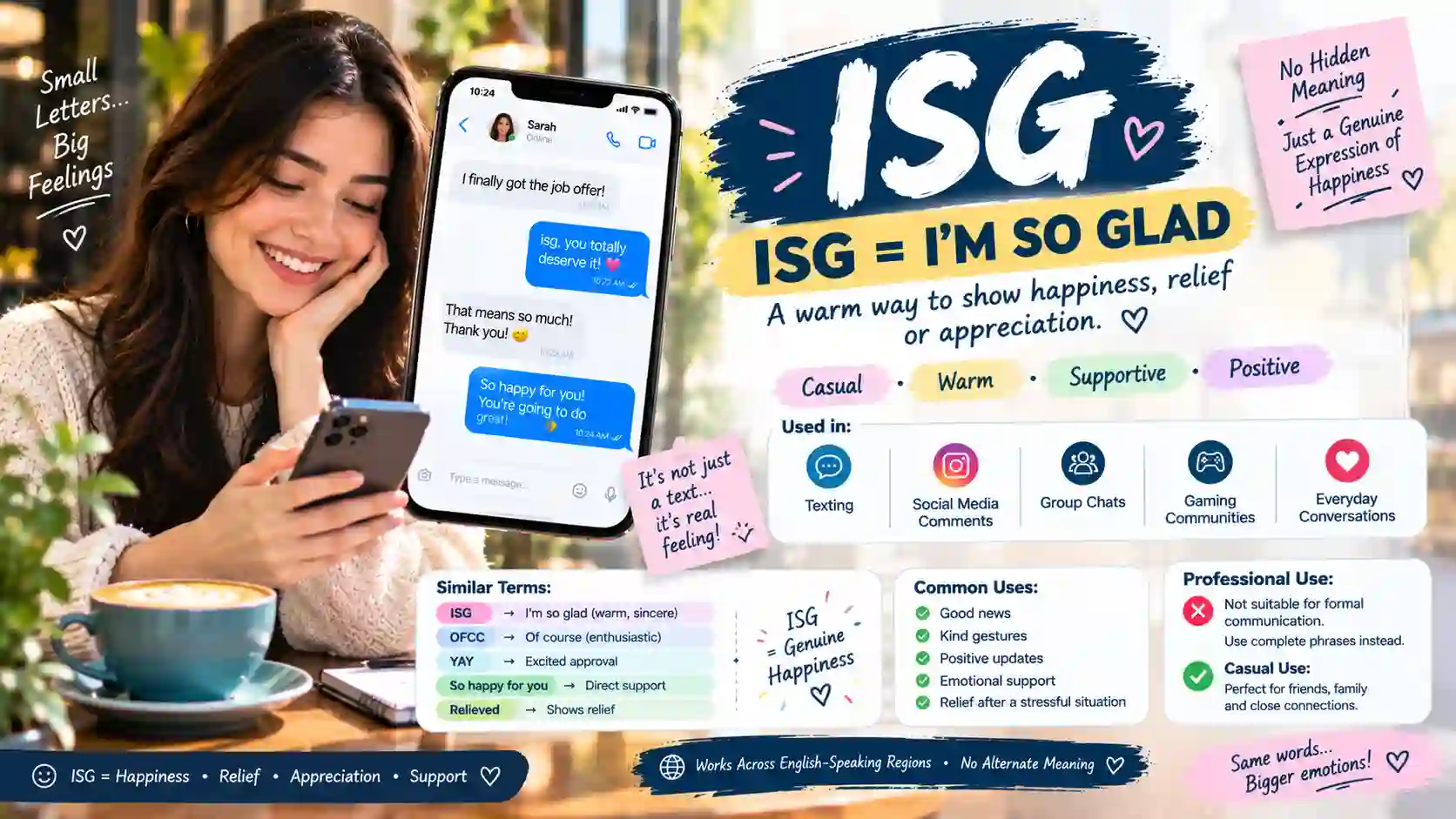
“ISG” stands for “I’m So Glad.” It’s a casual texting abbreviation used to express genuine happiness, relief, or appreciation about something. You’ll see it in texting, social media comments, and casual conversations, especially when someone wants to show heartfelt positive emotion in response to good news or a kind gesture.
Understanding “isg” matters because it’s part of the constantly growing world of texting shorthand, where short phrases carry real emotional weight. Knowing what it means helps you follow casual conversations naturally and recognize genuine warmth behind a quick message. This guide breaks down everything about “isg” its meaning, background, and how it’s used across texting and social platforms today.
ISG Meaning in Text: Definition & Explanation
“ISG” stands for “I’m So Glad.” It’s used to express genuine happiness, relief, or appreciation, often in response to good news, kind gestures, or positive outcomes.
Example in dialogue:
Friend: I finally got the job offer!
You: isg, you totally deserve it
Here, “isg” expresses heartfelt happiness for the other person’s good news.
It’s also used to show relief after a stressful situation resolves:
Friend: the surgery went well, everything’s okay now
You: isg, I’ve been thinking about you all day
In this case, “isg” conveys genuine relief and care.
Sometimes it’s used to express appreciation for a kind gesture:
Friend: I picked up your favorite coffee on my way over
You: isg you did that, exactly what I needed today
Across these examples, “isg” functions as a quick, sincere way to express positive emotion, whether that’s happiness, relief, or gratitude, without needing a longer explanation.
Background & History of ISG Meaning
Like many texting abbreviations, “isg” developed from the broader trend of shortening common emotional phrases during the rise of SMS and instant messaging in the 2000s and 2010s. The phrase “I’m so glad” has long been used in everyday spoken English to express genuine happiness or relief, making it a natural candidate for abbreviation as texting culture embraced shorthand for nearly everything.
As texting became a dominant form of emotional communication, especially among close friends and family checking in on each other, abbreviating warm, supportive phrases like “I’m so glad” helped people express genuine care quickly, without losing the emotional sincerity behind the message.
Today, “isg” appears most often in:
- Casual texting responding to good news or positive updates
- Social media comments expressing happiness for someone else’s achievement
- Group chats sharing relief after a stressful situation resolves
- Casual conversations expressing appreciation for a kind gesture
While it hasn’t reached the widespread recognition of terms like “omg” or “lol,” “isg” remains a warm, sincere shorthand within supportive texting circles.
ISG Meaning in Text: Usage in Various Contexts
The abbreviation “isg” adapts across different types of casual, emotionally expressive conversations.
In Texting
Friend: I passed my driving test today!
You: isg, congratulations!
In Social Media Comments
Under a friend’s engagement announcement, someone might comment: “isg for you both, you deserve this happiness”
In Gaming Communities
Teammate: we finally won after losing all week
You: isg, that losing streak was rough
In Casual Group Chats
Friend 1: the trip got approved, we’re going!
Friend 2: isg, this is going to be amazing
In each case, “isg” adds genuine warmth and emotional support, helping conversations feel caring and sincere without needing longer explanations.
Common Misconceptions & Clarifications
One common misconception is that “isg” is a universally recognized abbreviation. In reality, it’s more niche compared to other emotional texting shorthand.
Misconception 1: Everyone understands “isg” immediately.
Not true. Since it’s less common than abbreviations like “omg” or “lol,” some people might not recognize it right away, especially if they’re unfamiliar with this specific texting style.
Misconception 2: It’s only used for major news.
Not accurate. While often used for significant updates, “isg” can also express genuine happiness about smaller, everyday kindnesses or good moments.
Misconception 3: It requires an elaborate follow-up message.
Not necessarily. Like most casual emotional expressions, a short, sincere message is usually enough unless the conversation naturally continues further.
Clarification: “ISG” carries no hidden or alternate meaning beyond being a genuine, heartfelt way to express gladness or relief, making it simple to understand once recognized.
Similar Terms & Alternatives
Several related phrases carry similar meanings to “isg.” Here’s how they compare:
| Term | Meaning | Tone |
| Isg | “I’m so glad” | Warm, sincere |
| Ofcc | “Of course” (enthusiastic) | Eager, warm |
| Yay | General excitement | Casual, upbeat |
| So happy for you | Full phrase alternative | Warm, direct |
| Relieved | Direct emotional expression | Sincere |
While these terms overlap, “isg” stands out because it specifically expresses gladness or relief, making it slightly more emotionally specific than general excitement terms like “yay.”
How to Respond to This Term
If someone texts you “isg,” your response should match the warm, sincere tone of the conversation.
Casual Response
“thank you, means a lot!”
Playful/Funny Response
“isg too, we should celebrate!”
Professional Response (in relaxed workplace chats)
“Thank you, I really appreciate that.”
Privacy-Conscious Response (if you’d rather keep things brief)
“Thanks so much, really appreciate your support.”
Since “isg” carries genuine warmth, most responses can stay equally sincere and appreciative, matching its caring, supportive tone.
Regional or Cultural Differences
“ISG” is primarily used within English-speaking texting culture, especially among casual, younger internet users.
- United States: Common in casual texting and social media comments, especially among close friend groups.
- United Kingdom: Used similarly, often as a warm, supportive response to good news.
- Australia and Canada: Occasionally used in casual online conversations, following similar patterns as the U.S.
- Non-English-speaking regions: Less widely adopted, since it’s a fairly niche abbreviation compared to globally recognized terms like “omg” or “lol.”
The core meaning stays consistent wherever it’s used, though its popularity remains concentrated within specific casual texting communities that prioritize warm, emotional check-ins.
Comparison with Similar Terms
To clarify how “isg” differs from related expressions:
| Expression | Primary Use | Emotionally Specific? | Widely Recognized? |
| Isg | Expressing gladness or relief | Yes | Moderately |
| Yay | General excitement | No | Highly |
| Omg | Surprise or shock | No | Highly |
| So happy for you | Direct emotional support | Yes | Highly |
The key difference is that “isg” specifically centers on gladness and relief, while alternatives like “yay” or “omg” tend to express broader excitement or surprise rather than this particular emotional nuance.
Usage in Online Communities & Dating Apps
On dating apps like Tinder, Bumble, or Hinge, “isg” occasionally appears as a warm response to good news shared early in a conversation.
Example:
Match: just got back from an amazing trip, finally feeling relaxed
You: isg, sounds like exactly what you needed
On Twitter/X, “isg” is less common in public posts but may appear in replies or direct messages expressing genuine happiness for someone’s good news.
In gaming communities, it’s occasionally used to express relief or happiness after a long losing streak finally ends.
Tips for responding appropriately:
- On dating apps, use “isg” to show genuine warmth and interest in the other person’s life.
- In social media replies, it works well for sincere, supportive reactions to good news.
- In gaming chats, it’s a nice way to express shared relief or happiness about a positive outcome.
Hidden or Offensive Meanings
“ISG” carries no hidden or offensive meaning. It’s a simple, sincere way to express gladness or relief, with no alternate or inappropriate interpretation.
The only minor consideration is that, since it’s less universally recognized, some people might initially be confused by the abbreviation rather than interpreting it negatively.
Why tone and context matter: Since “isg” is inherently warm and positive, there’s little risk of misinterpretation beyond simple unfamiliarity with the term itself.
Suitability for Professional Communication
“ISG” is generally too casual for formal professional communication, such as client emails or official business messages. However, it may occasionally appear in relaxed internal workplace chats among close colleagues.
Professional alternatives:
- “I’m so glad to hear that.”
- “That’s wonderful news, I’m really happy for you.”
- “What a relief, thank you for sharing.”
- “I’m delighted to hear this.”
If communicating in a formal setting, it’s best to use a complete phrase rather than casual texting shorthand like “isg.”
FAQs
1. What does “isg” mean in texting?
It stands for “I’m so glad,” used to express genuine happiness or relief.
2. Is “isg” only used for big news?
No, it can also express happiness about smaller, everyday good moments or kindnesses.
3. Is “isg” rude to use?
Not at all. It’s a warm, sincere term with no negative connotation.
4. Where did “isg” come from?
It developed from casual texting shorthand, abbreviating the heartfelt phrase “I’m so glad.”
5. How should I respond to “isg”?
A simple, appreciative reply works perfectly, matching its warm, sincere tone.
6. Is “isg” appropriate for professional settings?
No, it’s better suited for casual, personal conversations rather than formal communication.
7. Is “isg” widely recognized?
It’s moderately recognized, mostly within casual texting circles, rather than universally known like “omg” or “lol.”
Conclusion
“ISG” is a warm, sincere texting abbreviation meaning “I’m so glad,” commonly used to express genuine happiness, relief, or appreciation in casual conversations. Its caring tone makes it a meaningful way to show emotional support.
While not suited for professional settings, “isg” adds a heartfelt touch to everyday texting and close friendships. Understanding its meaning helps you recognize genuine warmth and respond sincerely whenever it shows up in your conversations.
Discover More Article

Hello, I’m Insha, a passionate content writer with 2 years of experience creating clear, engaging, and helpful content. I specialize in the meaning niche, explaining words, slang, phrases, and online terms in simple language that readers can easily understand and use.








1 thought on ““ISG” Meaning in Text: What It Really Stands For<p class="post-updated-date">🕓 <span class="updated-label">Last updated on</span> <time datetime="2026-10-15T14:29:28+00:00">October 15, 2026</time></p><script type="application/ld+json"> { "@context": "https://schema.org", "@type": "BlogPosting", "mainEntityOfPage": { "@type": "WebPage", "@id": "https://outreachnexa.com/isg-meaning-in-text/" }, "datePublished": "2026-10-15T14:29:26+00:00", "dateModified": "2026-10-15T14:29:28+00:00" } </script>”