You’re texting a friend about something confusing or frustrating, and they reply with “ikdr.” No further explanation, just those four letters. What does it mean?
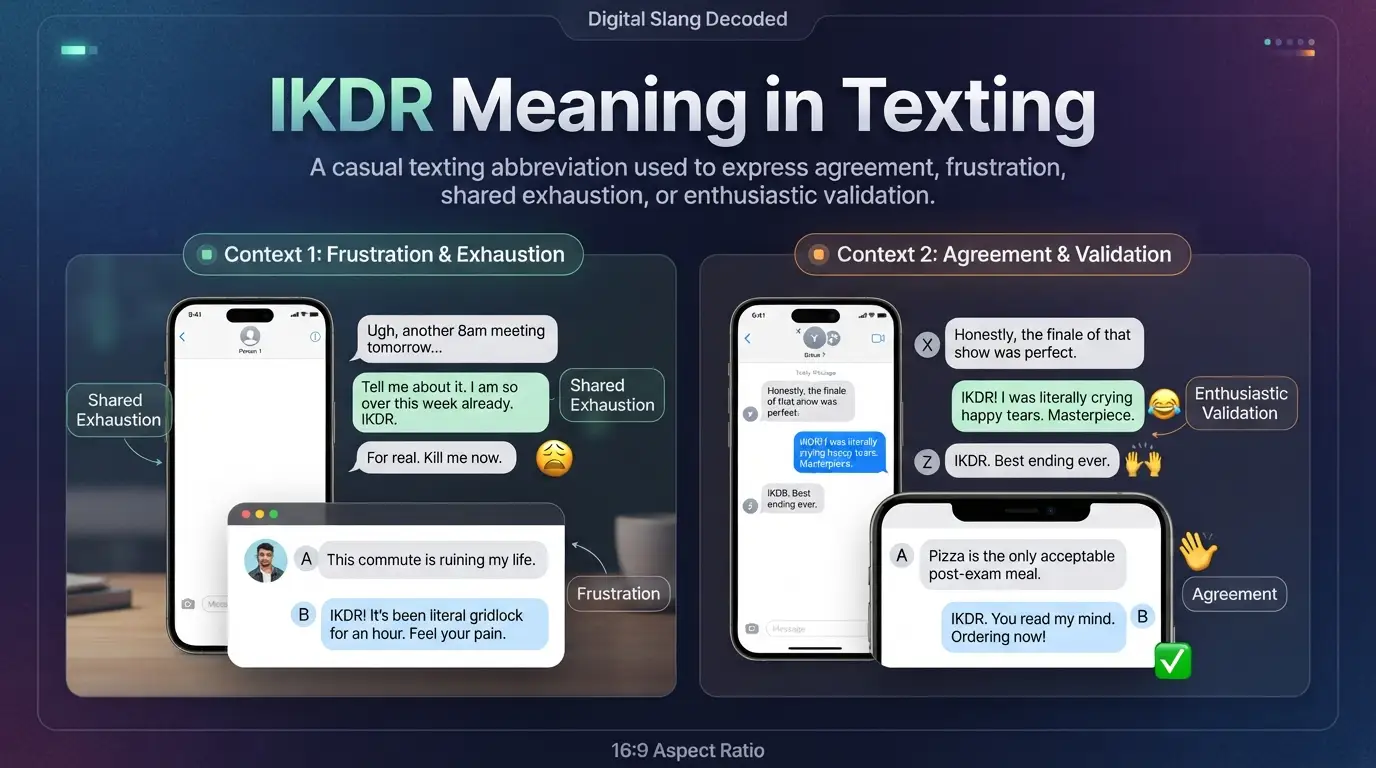
“IKDR” stands for “I know, don’t remind me” or “I know, dude, right,” depending on context. It’s a casual texting abbreviation used to express agreement, frustration, or shared exhaustion about a topic. You’ll spot it in group chats, social media comments, and casual conversations, especially when someone is venting or agreeing about something annoying.
Understanding “ikdr” matters because it’s part of the fast-evolving world of texting shorthand, where short phrases carry emotional weight. Knowing what it means helps you respond appropriately and avoid confusion in casual digital conversations. This guide breaks down everything about “ikdr” its meaning, origins, and how it’s used across different platforms today.
IKDR Meaning in Text: Definition & Explanation
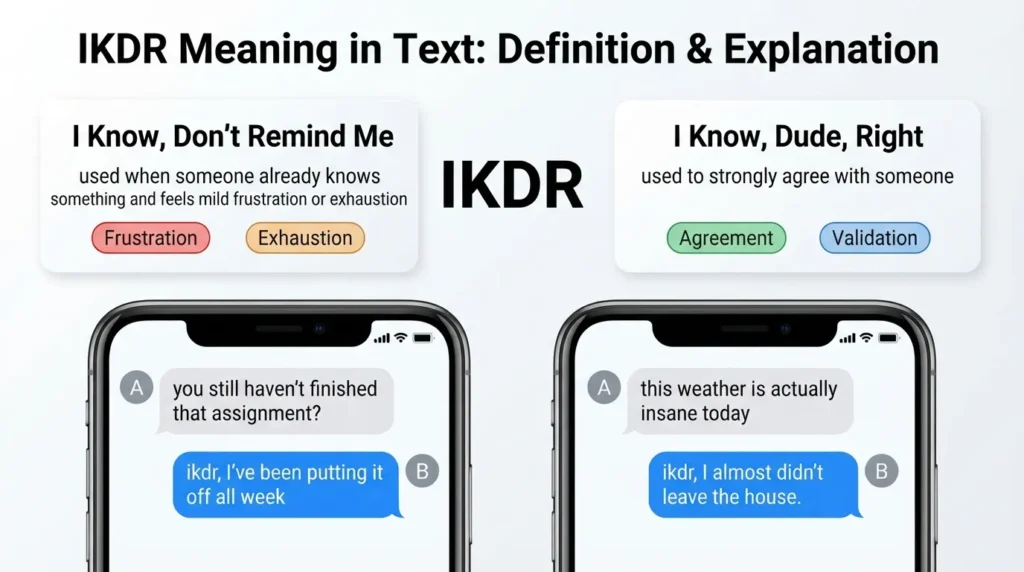
“IKDR” most commonly stands for “I know, don’t remind me.” It’s used to express agreement mixed with mild frustration or exhaustion about something already known or already a sore subject.
Example in dialogue:
Friend: you still haven’t finished that assignment?
You: ikdr, I’ve been putting it off all week
Here, “ikdr” signals that the person already knows the situation and doesn’t need the reminder, often with a hint of self-aware frustration.
It can also appear in a slightly different form, meaning “I know, dude, right,” used to agree enthusiastically with someone else’s statement:
Friend: The weather is seriously strange today.
You: ikdr, I almost didn’t leave the house
In this version, “ikdr” works similarly to “I know, right?” a quick way to validate what the other person said.
Because “ikdr” isn’t as universally standardized as terms like “lol” or “omg,” its exact meaning can shift slightly depending on the conversation, though it almost always signals agreement layered with either frustration or enthusiasm.
Background & History of IKDR Meaning
“IKDR” emerged as part of the broader wave of texting abbreviations that became popular in the 2000s and 2010s, when SMS character limits and fast-paced messaging encouraged shorter, quicker phrases.
It evolved from the more common phrase “I know, right?” a widely used expression of agreement in casual conversation. As texting culture embraced acronyms for nearly every common phrase, “ikdr” became a natural shorthand, especially among younger users active on messaging apps and social media.
Over time, the phrase picked up a secondary meaning, “I know, don’t remind me,” particularly useful for venting about frustrating or repetitive situations, like unfinished tasks, annoying habits, or ongoing personal struggles.
Today, “ikdr” appears most often in:
- Casual texting between friends
- Group chats venting about shared frustrations
- Social media comments agreeing with relatable content
- Meme captions expressing shared exhaustion
While it hasn’t reached the mainstream recognition of terms like “lol” or “omg,” it remains a popular shorthand within casual texting circles, especially among younger internet users.
IKDR Meaning in Text: Usage in Various Contexts
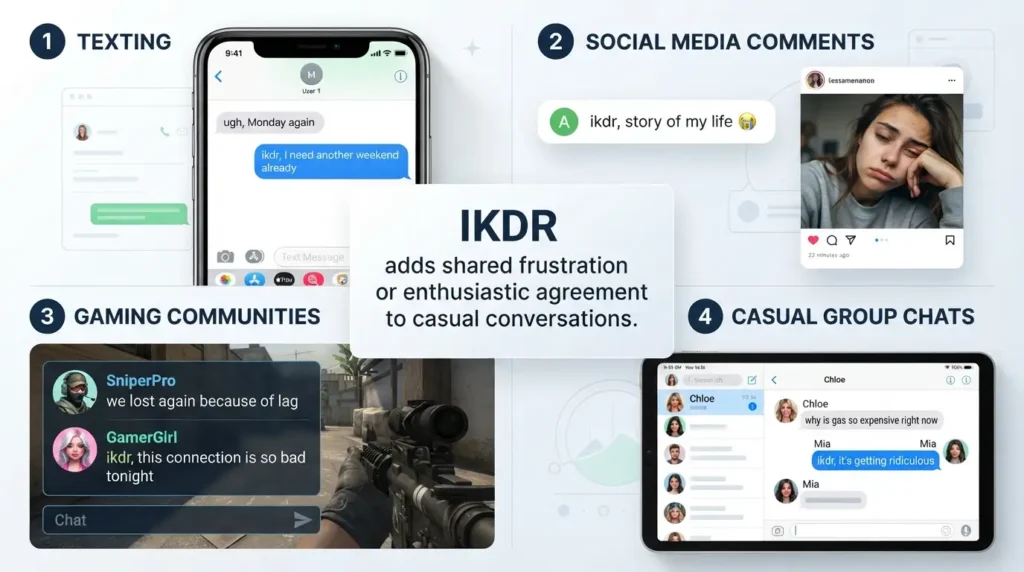
The abbreviation “ikdr” adapts across different types of casual conversations.
In Texting
Friend: ugh, Monday again
You: ikdr, I need another weekend already
In Social Media Comments
Under a relatable meme about procrastination, someone might comment: “ikdr, story of my life 😭”
In Gaming Communities
Teammate: we lost again because of lag
You: ikdr, this connection is so bad tonight
In Casual Group Chats
Friend 1: why is gas so expensive right now
Friend 2: ikdr, it’s getting ridiculous
In each case, “ikdr” adds a tone of shared frustration or enthusiastic agreement, helping conversations flow naturally without needing longer explanations.
Common Misconceptions & Clarifications
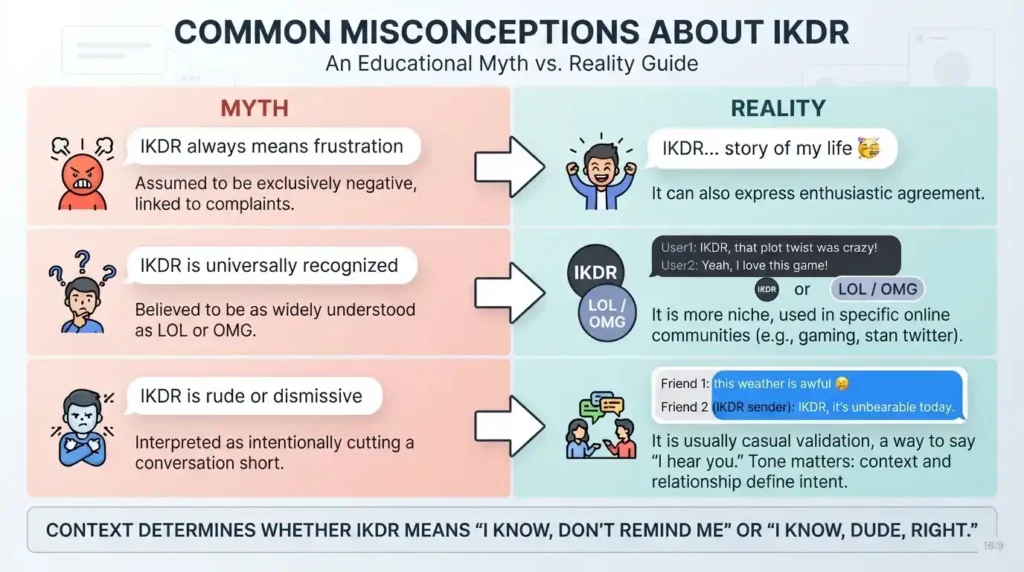
One common misconception is that “ikdr” has a single, fixed meaning. In reality, its interpretation shifts slightly based on tone and context.
Misconception 1: It always means frustration.
Not true. In some cases, it simply means enthusiastic agreement, similar to “I know, right?”
Misconception 2: It’s a universally recognized abbreviation.
Unlike widely known terms like “lol,” “ikdr” is more niche and might not be immediately understood by everyone, especially outside certain texting circles or age groups.
Misconception 3: It’s rude or dismissive.
While it can sound slightly short, it’s rarely meant to dismiss the other person. It usually reflects relatable frustration or quick validation.
Clarification: The meaning of “ikdr” depends heavily on the topic being discussed. If it follows a complaint, it likely means “I know, don’t remind me.” If it follows an exciting or relatable statement, it likely means “I know, right?”
Similar Terms & Alternatives
Several related phrases carry similar meanings to “ikdr.” Here’s how they compare:
| Term | Meaning | Tone |
| Ikdr | “I know, don’t remind me” or “I know, right” | Frustrated or enthusiastic |
| Ikr | “I know, right?” | Enthusiastic agreement |
| Idk | “I don’t know” | Uncertain |
| Fr | “For real” | Emphatic agreement |
| Same | Shared experience or feeling | Relatable, casual |
While these terms overlap, “ikdr” specifically combines agreement with emotional undertone, whether that’s frustration or enthusiasm, making it more expressive than simpler alternatives like “ikr.”
How to Respond to This Term

If someone texts you “ikdr,” your response should match the emotional tone of the conversation.
Casual Response
“haha same, it’s been a rough week”
Playful/Funny Response
“ikdr, we’re both a mess rn lol”
Professional Response (in relaxed workplace chats)
“Totally understand, let me know if you need help catching up.”
Privacy-Conscious Response (if the topic feels personal)
“No worries, take your time with it.”
Reading whether “ikdr” reflects frustration or agreement helps you respond with the right energy, whether that’s empathy, humor, or reassurance.
Regional or Cultural Differences
“IKDR” is primarily used within English-speaking texting culture, especially among younger users active on social media and messaging apps.
- United States: Common in casual texting and social media comments, especially among teens and young adults.
- United Kingdom: Used similarly, though “ikr” remains more popular overall.
- Australia: Occasionally used in casual online conversations, though less common than simpler abbreviations.
- Non-English-speaking regions: Less widely adopted, since it’s a fairly niche abbreviation compared to globally recognized terms like “lol” or “omg.”
The core meaning stays fairly consistent wherever it’s used, though its popularity is more concentrated within specific online youth culture rather than universal, cross-cultural texting slang.
Comparison with Similar Terms
To clarify how “ikdr” differs from related expressions:
| Expression | Primary Use | Implies Frustration? | Widely Recognized? |
| Ikdr | Agreement with emotional undertone | Sometimes | Moderately |
| Ikr | Simple agreement | Rarely | Highly |
| Fr | Emphatic agreement | Rarely | Highly |
| Same | Relatable agreement | Rarely | Highly |
The key difference is that “ikdr” carries a stronger emotional layer, either frustration or enthusiasm, while alternatives like “ikr” or “same” tend to be more neutral, straightforward agreements.
Usage in Online Communities & Dating Apps
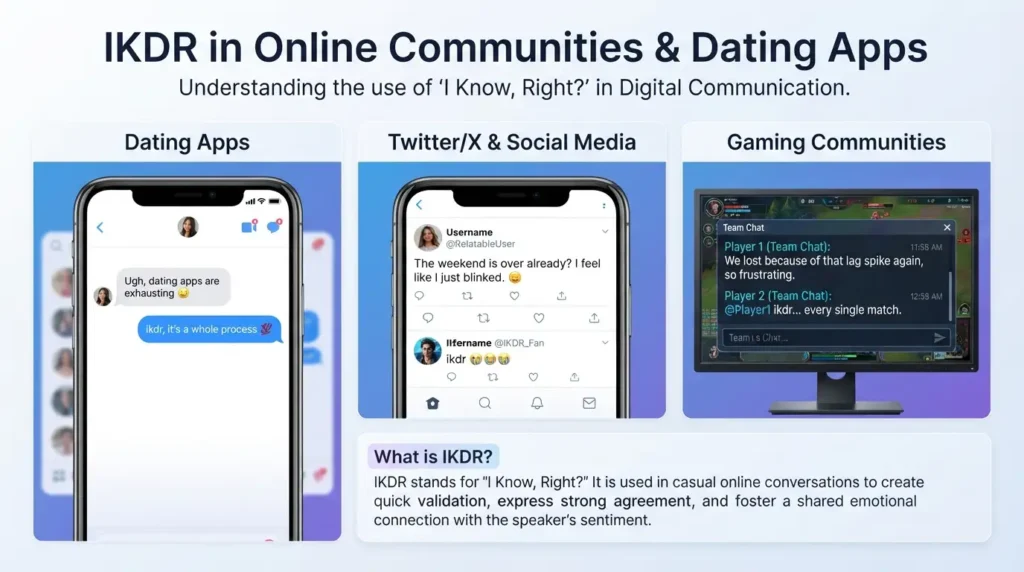
On dating apps like Tinder, Bumble, or Hinge, “ikdr” occasionally appears in casual banter, especially when bonding over shared frustrations or relatable experiences.
Example:
Match: ugh, dating apps are exhausting
You: ikdr, it’s a whole process
On Twitter/X, “ikdr” often shows up in replies to relatable posts about everyday frustrations, procrastination, or shared struggles.
In gaming communities, it’s used to express shared frustration over losses, lag, or repetitive in-game issues.
Tips for responding appropriately:
- On dating apps, use “ikdr” to build light, relatable connection over shared experiences.
- In social media replies, it works well for validating relatable content.
- In gaming chats, it’s ideal for acknowledging shared frustration without escalating negativity.
Hidden or Offensive Meanings
For the most part, “ikdr” is harmless and relatable. However, tone can slightly shift its impression:
- Dismissive undertone: If used abruptly in a serious conversation, it might come across as brushing off someone’s concern.
Friend: I’m really stressed about finals
You: ikdr
Without further support, this could feel slightly dismissive rather than empathetic.
- Sarcastic tone: In some cases, it can imply mild sarcasm about an obvious or repetitive complaint.
Why tone and context matter: Since “ikdr” doesn’t carry an inherently negative meaning, its interpretation depends on the emotional weight of the conversation. Pairing it with supportive follow-up messages helps avoid sounding dismissive.
Suitability for Professional Communication

“IKDR” is not appropriate for formal professional communication, such as client emails or official business messages. It’s a casual, informal abbreviation better suited for personal conversations.
However, in relaxed workplace chats among close coworkers, a similar sentiment might occasionally be expressed casually.
Professional alternatives:
- “I completely understand.”
- “I hear you, let’s figure this out together.”
- “That makes sense, thanks for sharing.”
- “I appreciate you letting me know.”
If unsure, it’s safer to avoid casual abbreviations like “ikdr” in professional settings and opt for clear, supportive language instead.
FAQs
1. What does “ikdr” mean in texting?
It stands for “I know, don’t remind me” or “I know, dude, right,” depending on context.
2. Is “ikdr” the same as “ikr”?
They’re similar, but “ikdr” often carries a stronger emotional tone, especially frustration or exhaustion.
3. Is “ikdr” rude to use?
Not usually. It’s mostly harmless, though it can sound slightly dismissive if used abruptly in serious conversations.
4. Where did “ikdr” come from?
It evolved from the phrase “I know, right?” as part of broader internet texting shorthand.
5. Can “ikdr” be used positively?
Yes, it can express enthusiastic agreement, similar to “I know, right?”
6. Is “ikdr” appropriate for professional settings?
No, it’s better suited for casual conversations rather than formal communication.
7. Is “ikdr” widely recognized?
It’s moderately recognized, especially among younger texting communities, though not as universal as terms like “lol” or “ikr.”
Conclusion
“IKDR” is a casual texting abbreviation that expresses agreement layered with either frustration or enthusiasm, depending on context. It reflects the playful, expressive nature of modern digital communication.
While not suited for professional settings, “ikdr” adds relatable emotional tone to everyday texting, social media, and casual conversations. Understanding its dual meaning helps you use it naturally and respond appropriately whenever it shows up in your conversations.
Discover More Article

Hello, I’m Insha, a passionate content writer with 2 years of experience creating clear, engaging, and helpful content. I specialize in the meaning niche, explaining words, slang, phrases, and online terms in simple language that readers can easily understand and use.