You’re texting a friend about weekend plans, and they reply with “otg?” No further explanation, just three letters. What are they asking you?
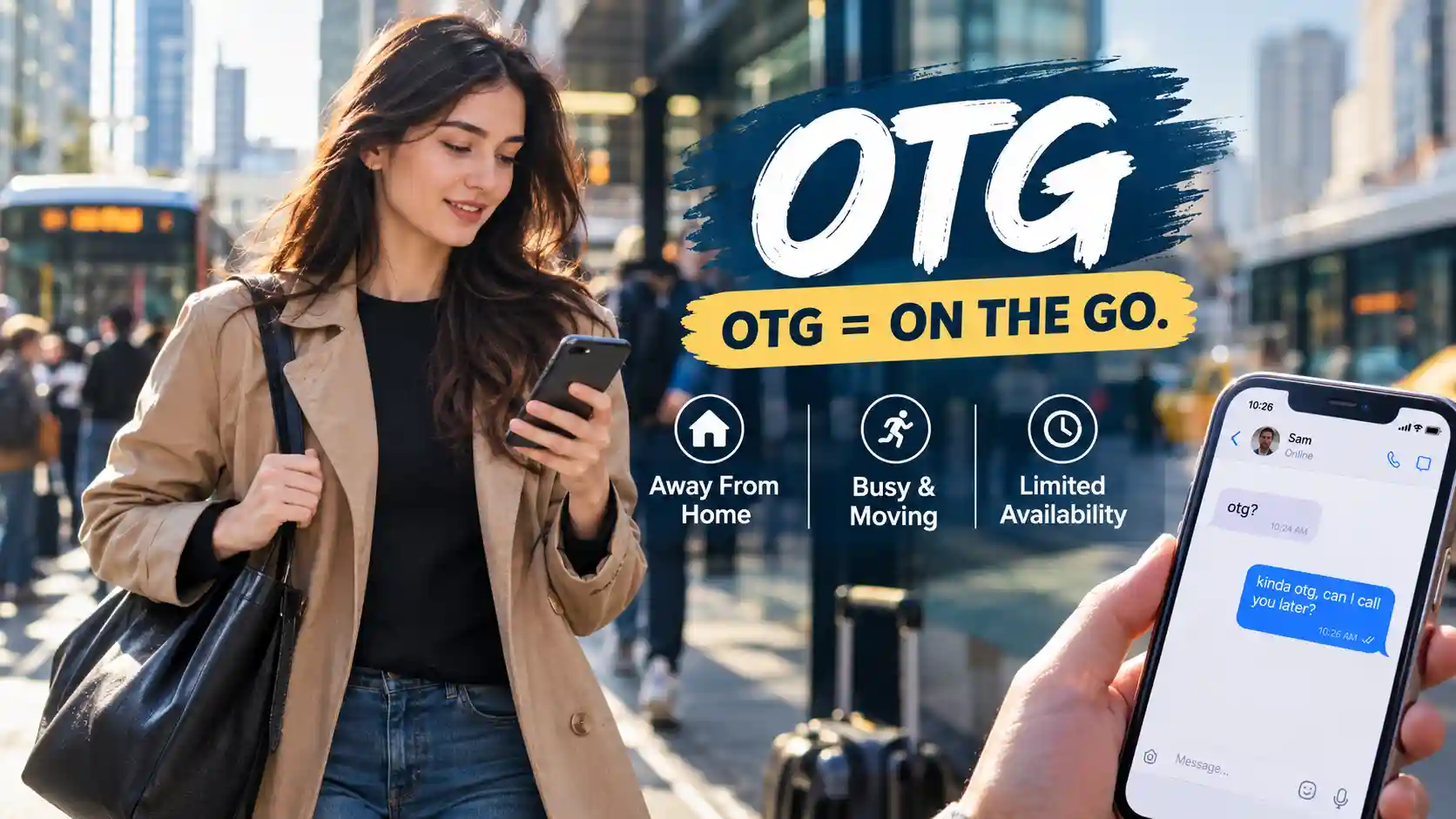
“OTG” stands for “On The Go.” It’s a casual texting abbreviation used to describe being out and about, away from home, or doing something while traveling or moving around. You’ll see it in texting, social media captions, gaming chats, and casual conversations, especially when someone wants to describe their current location status or activity level in a quick, efficient way.
Understanding “otg” matters because it’s a practical piece of texting shorthand that comes up constantly in everyday conversations about plans, availability, and daily life. Knowing what it means helps you follow casual conversations naturally and respond appropriately when someone asks about your current status. This guide breaks down everything about “otg” its meaning, background, and how it’s used across texting and social platforms today.
OTG Meaning in Text: Definition & Explanation
“OTG” stands for “On The Go.” It’s used to describe being away from home, actively moving between places, or doing something while traveling, running errands, or staying busy throughout the day.
Example in dialogue:
Friend: can you talk right now?
You: kinda otg, can I call you later?
Here, “otg” quickly explains that the person is currently out and busy, making a longer phone call difficult at the moment.
It’s also used to describe a general lifestyle or daily routine:
Friend: you’re always so busy lately
You: yeah, been otg all week with errands and work
In this case, “otg” reflects a broader pattern of staying active and moving between different tasks or locations.
Sometimes it’s used in social media captions describing a busy day:
Instagram caption: otg since 7am, no rest for the wicked ☕
Across these examples, “otg” functions as a quick, practical way to describe being away from home or constantly moving, helping explain availability or daily activity level without a lengthy explanation.
Background & History of OTG Meaning
The phrase “on the go” has been part of everyday English for a long time, commonly used to describe an active, busy lifestyle or being away from home while running errands or traveling. It became especially popular in marketing and product descriptions throughout the 20th century, with phrases like “food on the go” or “on-the-go snacks” describing convenience for busy, mobile lifestyles.
As texting culture grew in the 2000s and 2010s, people began abbreviating this common phrase to “otg,” fitting the broader trend of shortening everyday expressions for quicker typing. This abbreviation became especially useful for describing availability or explaining why someone couldn’t talk at length, since being “on the go” often means limited time or attention for lengthy conversations.
Social media further popularized “otg” as a quick way to caption busy days, travel content, or active lifestyles, especially among users documenting daily routines or adventures.
Today, “otg” appears most often in:
- Casual texting explaining current availability or location status
- Social media captions describing busy or active days
- Group chats coordinating plans or checking on someone’s whereabouts
- Casual conversations about daily routines or lifestyle habits
While it started as a simple way to describe physical movement, “otg” now broadly captures the fast-paced, busy nature of modern daily life.
OTG Meaning in Text: Usage in Various Contexts
The abbreviation “otg” adapts across different types of casual conversations.
In Texting
Friend: are you home right now?
You: no, otg running errands, back in an hour
In Social Media Captions
A travel photo might be captioned: “otg exploring new cities this summer ✈️”
In Gaming Communities
Teammate: you joining the match tonight?
You: might be otg later, I’ll let you know
In Casual Group Chats
Friend 1: anyone free to grab lunch?
Friend 2: otg today, can’t make it, next time though
In each case, “otg” adds a quick, practical explanation of someone’s current status, helping conversations flow smoothly without requiring a detailed explanation.
Common Misconceptions & Clarifications
One common misconception is that “otg” always means someone is completely unavailable. In reality, it often just means they’re busy or away from home, not necessarily unreachable.
Misconception 1: It means someone can’t respond at all.
Not true. While it often signals limited availability, many people still respond to texts while “otg,” just perhaps more briefly than usual.
Misconception 2: It’s only used to describe travel.
Not accurate. While travel is a common context, “otg” is just as often used for everyday errands, work commutes, or simply being away from home for any reason.
Misconception 3: It’s a universally recognized abbreviation.
Unlike widely known terms like “omw” (on my way), “otg” is slightly less common and might not be instantly understood by everyone, especially outside casual texting circles.
Clarification: “OTG” simply describes being away from home or actively moving between places, without necessarily indicating complete unavailability or any specific activity.
Similar Terms & Alternatives to OTG Meaning
Several related phrases carry similar meanings to “otg.” Here’s how they compare:
| Term | Meaning | Tone |
| Otg | “On the go” | Casual, practical |
| Omw | “On my way” | Casual, specific |
| Brb | “Be right back” | Casual, temporary |
| Out and about | Full phrase alternative | Neutral, descriptive |
| Busy | General availability status | Neutral |
While these terms overlap, “otg” specifically describes being away from home or actively moving, making it more descriptive of location and activity than terms like “brb,” which simply indicates a short absence.
How to Respond to This Term
If someone texts you “otg,” your response should match the casual, practical tone of the conversation.
Casual Response
“no worries, talk later when you’re free”
Playful/Funny Response
“lol you’re always otg, slow down for a second”
Professional Response (in relaxed workplace chats)
“Understood, I’ll follow up when you’re available.”
Privacy-Conscious Response (if you’d rather not share details)
“Got it, let me know when you’re back”
Since “otg” is a practical status update, most responses can stay brief and understanding, matching its efficient, informative tone.
Regional or Cultural Differences
“OTG” is widely used across English-speaking texting culture, without major regional restrictions, since it describes a universal, everyday concept.
- United States: Common in casual texting and social media, especially describing busy days or travel.
- United Kingdom: Used similarly, often in casual conversations about errands or daily routines.
- Australia and Canada: Common in casual texting, following similar patterns as the U.S.
- Non-English-speaking regions: Less universally adopted in its abbreviated form, though the concept of being “on the go” is understood globally, especially among English learners and internet-active users.
The core meaning of “otg” stays consistent wherever it’s used, since it directly describes a common, relatable daily experience.
Comparison with Similar Terms
To clarify how “otg” differs from related expressions:
| Expression | Primary Use | Indicates Location Change? | Common Setting |
| Otg | Being away from home or busy | Yes | Texting, social media |
| Omw | Traveling to a specific destination | Yes | Texting |
| Brb | Temporary absence | No | All chat platforms |
| Busy | General unavailability | No | Texting, workplace |
The key difference is that “otg” specifically implies movement or being away from home, while terms like “brb” simply indicate a short pause without describing location or activity.
Usage in Online Communities & Dating Apps
On dating apps like Tinder, Bumble, or Hinge, “otg” occasionally appears in bios or casual conversations describing an active, busy lifestyle.
Example:
Match: what’s a typical weekend for you?
You: usually otg, hiking or trying new restaurants
On Twitter/X, “otg” sometimes appears in casual tweets describing busy days or travel adventures.
In gaming communities, it’s used to explain limited availability for gaming sessions due to being away from home.
Tips for responding appropriately:
- On dating apps, use “otg” to describe an active lifestyle in a way that invites further conversation about shared interests.
- In social media captions, it works well for describing busy, adventurous days.
- In gaming chats, it’s a quick way to explain limited availability without lengthy excuses.
Hidden or Offensive Interpretations of OTG Meaning
“OTG” carries no hidden or offensive meaning. It’s a straightforward, practical way to describe being away from home or busy with activities.
The only minor consideration is that, since it’s less universally recognized compared to terms like “omw,” some people might initially be unfamiliar with the abbreviation rather than interpreting it negatively.
Why tone and context matter: Since “otg” is inherently neutral and practical, there’s little risk of misinterpretation. It’s widely understood as a simple status update once recognized.
Suitability for Professional Communication
“OTG” is generally too casual for formal professional communication, such as client emails or official business messages. However, it may occasionally appear in relaxed internal workplace chats among close colleagues.
Professional alternatives:
- “I’m currently out of the office.”
- “I’m away from my desk at the moment.”
- “I’m traveling for work today.”
- “I’ll be out and about, but reachable by phone.”
If communicating in a formal setting, it’s best to use a clear, complete phrase rather than casual texting shorthand like “otg.”
FAQs
1. What does “otg” mean in texting?
It stands for “on the go,” describing being away from home or busy moving between places.
2. Does “otg” mean someone can’t respond to texts?
Not necessarily. It often just means limited availability, not complete unreachability.
3. Is “otg” the same as “omw”?
They’re related, but “otg” describes a general busy or traveling status, while “omw” specifically means heading to a particular destination.
4. Is “otg” appropriate for professional settings?
No, it’s better suited for casual conversations rather than formal communication.
5. Where did “otg” come from?
It developed from the common phrase “on the go,” abbreviated through casual texting culture.
6. Is “otg” used internationally?
Yes, the concept is universally understood, though the specific abbreviation is most common in English-speaking texting culture.
7. Can “otg” describe a lifestyle, not just a single moment?
Yes, it can describe someone’s generally busy, active daily routine, not just a one-time situation.
Conclusion
“OTG” is a practical texting abbreviation meaning “on the go,” used to describe being away from home, busy with errands, or actively moving between places. It reflects the fast-paced nature of modern daily life.
While not suited for professional settings, “otg” adds a quick, efficient way to explain availability or describe an active lifestyle in everyday texting and social media. Understanding this simple abbreviation helps you communicate your status clearly and respond naturally whenever it shows up in your conversations.
Discover More Article

Hi, I’m Mahgull, a dedicated content writer with 2 years of experience in the meaning niche. I enjoy turning complex words, slang, abbreviations, and phrases into simple, informative content that helps readers understand their meanings clearly and quickly.





1 thought on ““What Does ‘OTG’ Mean? The Complete Texting Guide”(2026)<p class="post-updated-date">🕓 <span class="updated-label">Last updated on</span> <time datetime="2026-10-11T17:03:57+00:00">October 11, 2026</time></p><script type="application/ld+json"> { "@context": "https://schema.org", "@type": "BlogPosting", "mainEntityOfPage": { "@type": "WebPage", "@id": "https://outreachnexa.com/otg-meaning-in-text/" }, "datePublished": "2026-10-11T17:03:54+00:00", "dateModified": "2026-10-11T17:03:57+00:00" } </script>”