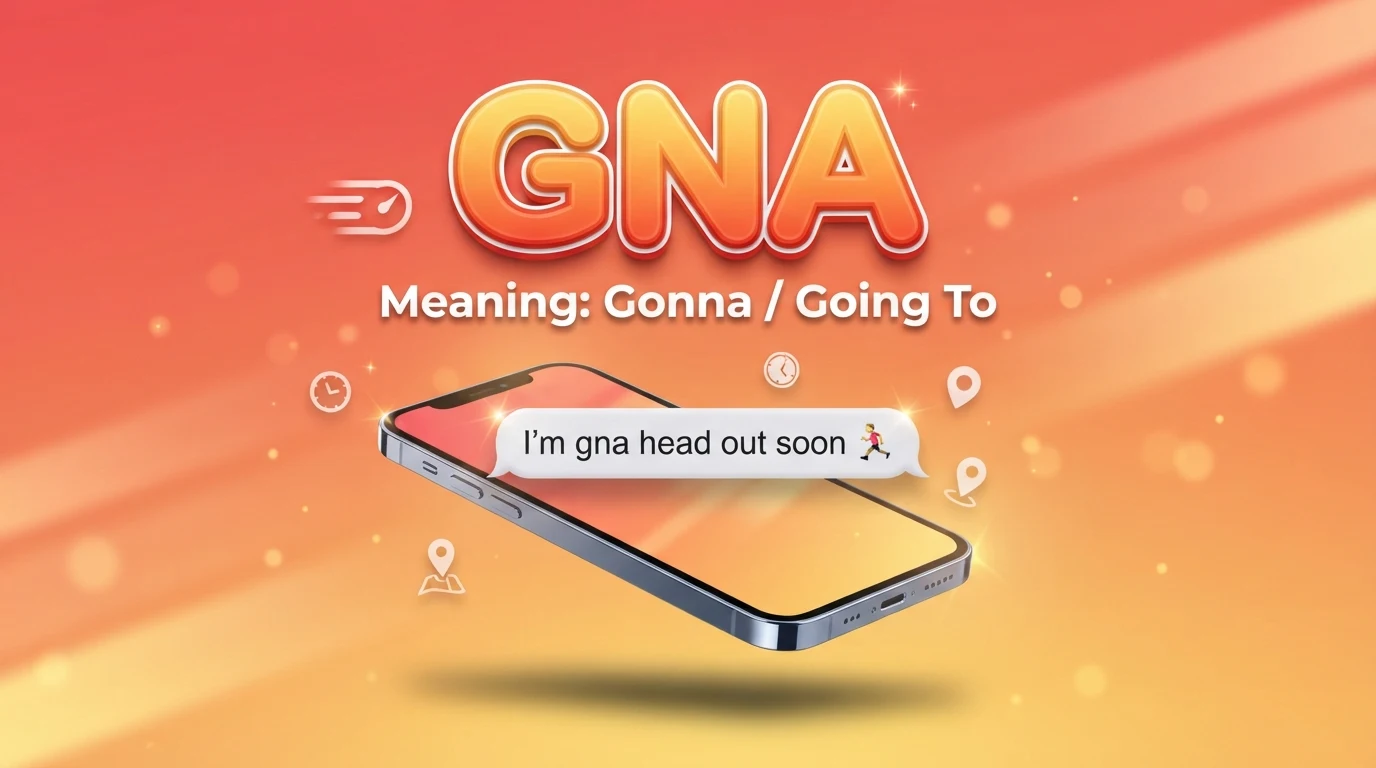
You’re reading a text from a friend, and you spot the letters “gna” tucked into their message. Maybe it’s “I’m gna head out soon” or “gna be a long day.” What does it mean?
“GNA” is a shortened way of typing “gonna,” which itself is a casual spelling of “going to.” It’s one of the most common texting abbreviations, used constantly in casual texting, social media captions, gaming chats, and everyday conversations. You’ll see it whenever someone talks about future plans or intentions in a relaxed, informal way.
Understanding “gna” matters because it reflects how texting language mirrors natural, casual speech. Knowing this term helps you read messages quickly and respond naturally, without pausing over simple abbreviations. This guide breaks down everything about “gna” its meaning, origins, and how it’s used across texting and social platforms today.
GNA Meaning in Text: Definition & Explanation
“GNA” is a shortened spelling of “gonna,” which itself is a casual version of “going to.” It’s used to describe future plans, intentions, or predictions in a relaxed, conversational tone.
Example in dialogue:
Friend: what are your plans for tonight?
You: I’m gna stay in and relax
Here, “gna” replaces “going to,” keeping the message quick and casual.
It’s also used to describe predictions or expectations:
Friend: have you seen the weather forecast?
You: yeah, it’s gna rain all weekend
In this case, “gna” expresses an expected outcome, similar to saying “going to” in a normal sentence.
Sometimes it appears in more playful or urgent contexts:
Friend: we’re gna be late if we don’t leave now
You: let’s go then!
Across these examples, “gna” functions exactly like “gonna” or “going to,” just spelled in an even shorter, more casual way that fits naturally into fast-paced texting.
Background & History of GNA Meaning
The word “gonna” itself has been used in spoken English for a very long time, as a natural contraction of “going to” that reflects how people actually talk in casual conversation. Long before texting existed, “gonna” was common in everyday speech, song lyrics, and informal writing.
When SMS texting became popular in the early 2000s, character limits and the desire to type quickly encouraged people to shorten even casual contractions like “gonna” even further. Dropping the “o” to create “gna” fit perfectly into this trend of saving keystrokes while keeping the same meaning and tone.
As texting and social media evolved through the 2010s, “gna” became a common sight in casual digital writing, especially among younger users who valued speed and informality in their messages. It followed a similar pattern to other shortened contractions like “wanna” becoming “wna” in some casual texting styles.
Today, “gna” appears most often in:
- Casual texting describing future plans or predictions
- Social media captions about upcoming events or activities
- Gaming chats discussing strategies or next moves
- Casual conversations expressing intentions
While it started as a simple way to save time typing, “gna” now reflects a broader culture of casual, conversational texting that mirrors natural speech patterns.
GNA Meaning in Text: Usage in Various Contexts
The abbreviation “gna” adapts naturally across different types of conversations.
In Texting
Friend: you still coming over later?
You: yeah, I’m gna head over around 7
In Social Media Captions
A caption about an upcoming trip might read: “gna be an amazing weekend 🌴”
In Gaming Communities
Teammate: what’s the plan for this round?
You: I’m gna flank from the left side
In Casual Group Chats
Friend 1: dinner plans for tonight?
Friend 2: gna order pizza, anyone want in?
In each case, “gna” keeps the message quick and casual, helping conversations move naturally without slowing down for full spelling.
Common Misconceptions About GNA Meaning
One common misconception is that “gna” is a completely different word from “gonna” or “going to.” In reality, it’s simply a shorter spelling of the same phrase.
Misconception 1: It’s a separate slang term with its own meaning.
Not true. “Gna” means exactly the same thing as “gonna” or “going to,” just written in a more condensed form.
Misconception 2: It’s only used by younger texters.
Not entirely accurate. While common among younger users, people across many age groups use “gna” in casual texting, especially when prioritizing speed over formality.
Misconception 3: It’s inappropriate or unprofessional in every context.
Partially true. While too casual for formal writing, it’s completely normal and acceptable in everyday texting and casual conversations.
Clarification: “GNA” carries no hidden or alternate meaning beyond being a quick, casual way to type “gonna” or “going to,” making it one of the simplest texting abbreviations to understand.
Similar Terms & Alternatives to GNA Meaning
Several related contractions and abbreviations are used in similar ways to “gna.” Here’s how they compare:
| Term | Meaning | Tone |
| Gna | “Gonna” or “going to” | Casual, quick |
| Gonna | Standard casual contraction | Casual |
| Finna | “Fixing to” (about to) | Very casual, regional |
| Bout to | “About to” | Casual |
| Will | Formal future tense | Neutral to formal |
While these terms all describe future intentions, “gna” stands out as one of the most condensed, casual versions, making it ideal for fast-paced texting rather than formal or even standard casual writing.
How to Respond When Someone Says GNA in Text

If someone texts you using “gna,” your response can naturally match the same casual tone.
Casual Response
“sounds good, see you then”
Playful/Funny Response
“lol you’re always ‘gna’ do something, let’s see if it happens this time”
Professional Response (in relaxed workplace chats)
“Got it, let me know if the timeline changes.”
Privacy-Conscious Response (if you’d rather keep things simple)
“Okay, sounds good.”
Since “gna” is simply a casual way of expressing future plans, most responses can stay natural and conversational, matching its relaxed tone.
Regional & Cultural Differences in GNA Meaning
“GNA” is widely used across English-speaking texting culture, without major regional restrictions, since it’s simply a shortened spelling of a common English contraction.
- United States: Extremely common in casual texting and social media, especially among younger users.
- United Kingdom: Used similarly, often in relaxed, informal conversations.
- Australia and Canada: Common in casual texting, following similar patterns as the U.S.
- Non-English-speaking regions: Less universally adopted in its shortened form, though “gonna” itself is widely recognized among English learners and internet-active users worldwide.
The core meaning of “gna” stays consistent wherever it’s used, since it directly mirrors the already well-known contraction “gonna.”
GNA Meaning Compared to Similar Terms
To clarify how “gna” differs from related expressions:
| Expression | Primary Use | Formality Level | Common Setting |
| Gna | Casual future intention | Very casual | Texting, social media |
| Gonna | Standard casual contraction | Casual | Speech, informal writing |
| Finna | Regional “about to” | Very casual | Casual texting, certain dialects |
| Will | Formal future tense | Formal | Professional writing |
The key difference is that “gna” takes casualness even further than “gonna,” making it specifically suited for quick, informal texting rather than any formal or semi-formal context.
GNA Meaning in Online Communities & Dating Apps
On dating apps like Tinder, Bumble, or Hinge, “gna” often appears in casual conversations about plans or future dates.
Example:
Match: gna be free this weekend if you want to grab coffee
You: sounds great, looking forward to it
On Twitter/X, “gna” frequently appears in casual tweets describing upcoming plans, predictions, or intentions.
In gaming communities, it’s commonly used to describe strategies or next moves during gameplay discussions.
Tips for responding appropriately:
- On dating apps, “gna” fits naturally into casual, relaxed conversations about plans.
- In social media captions, it works well for describing upcoming events in a laid-back tone.
- In gaming chats, it’s a quick way to communicate strategy without slowing down the conversation.
Hidden or Offensive Interpretations of GNA Meaning
“GNA” carries no hidden or offensive meaning. It’s simply a casual, shortened way of writing “gonna” or “going to,” with no alternate or inappropriate interpretation.
The only minor consideration is that, like many heavily abbreviated texting styles, it might feel too casual or informal in certain contexts, though this reflects a style choice rather than any negative connotation.
Why tone and context matter: Since “gna” is purely a casual spelling choice, there’s no risk of misinterpretation beyond its informal tone potentially feeling out of place in more formal settings.
Is GNA Meaning Suitable for Professional Communication?
“GNA” is not appropriate for formal professional communication, such as client emails or official business messages. Its highly casual spelling doesn’t fit workplace expectations for clear, professional writing.
However, in very relaxed internal workplace chats among close colleagues, it might occasionally appear without seeming entirely out of place.
Professional alternatives:
- “I’m going to…”
- “I will be…”
- “I plan to…”
- “I’m planning on…”
If communicating in a formal setting, it’s best to use the full phrase rather than the heavily abbreviated “gna,” ensuring clarity and professionalism.
FAQs
1. What does “gna” mean in texting?
It’s a shortened spelling of “gonna,” meaning “going to.”
2. Is “gna” different from “gonna”?
No, they mean exactly the same thing. “Gna” is simply an even more condensed spelling.
3. Is “gna” appropriate for professional settings?
No, it’s too casual for formal communication and should be avoided in professional writing.
4. Where did “gna” come from?
It developed from the casual contraction “gonna,” shortened further through texting culture’s focus on speed and efficiency.
5. Is “gna” used the same way everywhere?
Yes, since it directly mirrors the widely recognized contraction “gonna,” its meaning stays consistent across most English-speaking regions.
6. Can “gna” be used in professional texting with coworkers?
It’s best avoided even in casual workplace texting, since “gonna” or “going to” still comes across as more polished.
7. Does “gna” have any alternate meanings?
No, it exclusively means “gonna” or “going to,” with no hidden or alternate interpretation.
Conclusion
“GNA” is a casual, shortened spelling of “gonna,” used to describe future plans, intentions, or predictions in everyday texting. It reflects how digital communication often mirrors natural, relaxed speech patterns.
While not suited for professional settings, “gna” fits naturally into casual texting, social media, and everyday conversations. Understanding this simple abbreviation helps you read and respond to messages quickly, keeping conversations flowing naturally.
Discover More Article

Hi, I’m Mahgull, a dedicated content writer with 2 years of experience in the meaning niche. I enjoy turning complex words, slang, abbreviations, and phrases into simple, informative content that helps readers understand their meanings clearly and quickly.




1 thought on ““GNA” Meaning in Text: What It Really Stands For (2026)<p class="post-updated-date">🕓 <span class="updated-label">Last updated on</span> <time datetime="2026-10-08T14:35:21+00:00">October 8, 2026</time></p><script type="application/ld+json"> { "@context": "https://schema.org", "@type": "BlogPosting", "mainEntityOfPage": { "@type": "WebPage", "@id": "https://outreachnexa.com/gna-meaning-in-text/" }, "datePublished": "2026-10-08T14:35:20+00:00", "dateModified": "2026-10-08T14:35:21+00:00" } </script>”