You’re texting someone, and they reply with just “erm…” before answering your question. No real content yet, just that one word hanging there. What’s going on?
“Erm” is a filler word people use to express hesitation, confusion, or a pause before responding. It’s the written version of the sound people make when they’re thinking out loud. You’ll see it constantly in texting, social media comments, gaming chats, and casual conversations, especially when someone needs a beat before answering.
Understanding “erm” matters because it carries emotional tone, not just literal meaning. It can signal awkwardness, sarcasm, confusion, or gentle hesitation, depending on how it’s used. This guide breaks down everything about “erm” — its meaning, history, and how to read it correctly in different conversations.
Erm Meaning in Text: Definition & Explanation
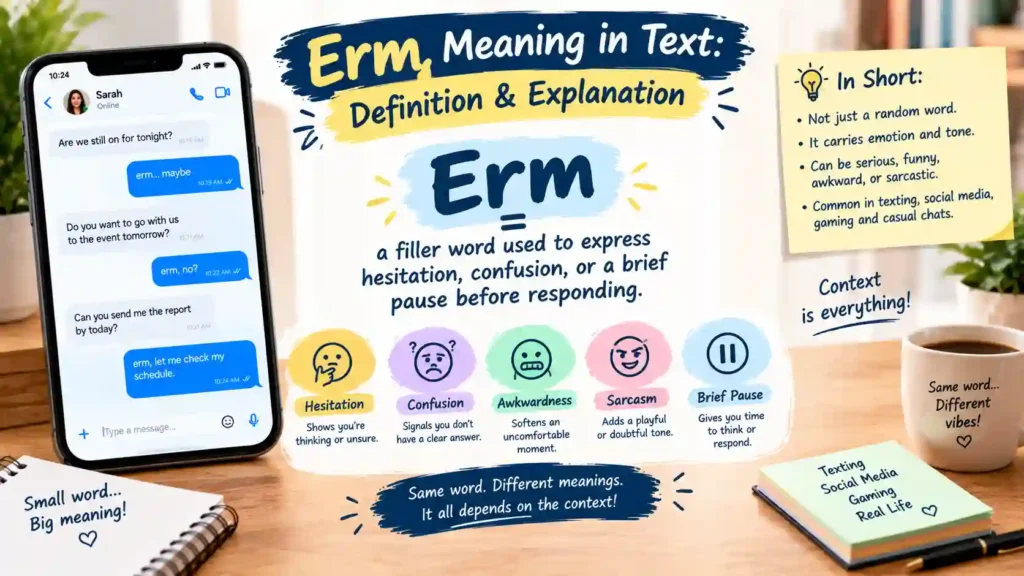
“Erm” is a filler word used to express hesitation, confusion, or a brief pause before speaking or typing. It’s the text-based version of a verbal stutter, similar to “um” or “uh,” but often carries a slightly more awkward or hesitant tone.
Example in dialogue:
Friend: did you eat my leftovers?
You: erm… maybe
Here, “erm” signals hesitation before admitting something slightly embarrassing.
It’s also used to express confusion or disbelief:
Friend: I think aliens built the pyramids
You: erm, no?
In this case, “erm” adds a skeptical or mildly sarcastic tone, softening a disagreement while still making the point clear.
Sometimes it shows up when someone is caught off guard by a question:
Coworker: are you free this weekend to help me move?
You: erm, let me check my schedule
Here, “erm” buys a moment before giving a non-committal or cautious answer.
Across these examples, “erm” functions as an emotional cushion, softening responses, signaling hesitation, or adding a touch of humor or sarcasm depending on context.
Background & History of Erm Meaning
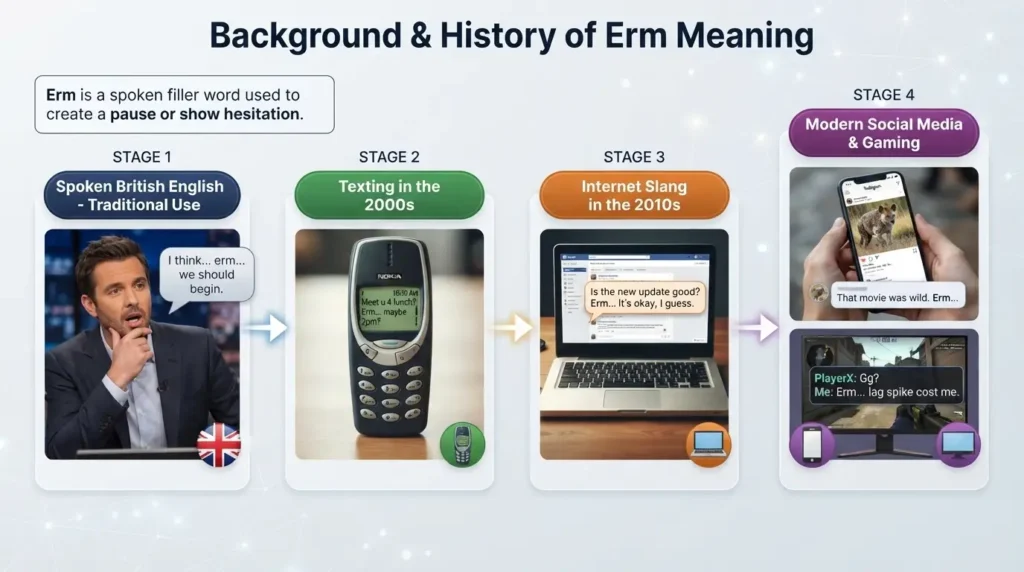
“Erm” originated as a spoken filler word, especially common in British English, long before texting existed. It functioned the same way “um” does in American English, giving speakers a moment to think mid-sentence.
As texting and instant messaging became widespread in the 2000s, spoken filler words like “erm” made their way into written conversations. People began typing out these natural speech patterns to mimic real-life hesitation, especially in casual or emotionally expressive texts.
By the 2010s, “erm” had become a common feature of internet slang, particularly popular in the UK, Australia, and parts of Europe, though it’s now widely understood and used internationally through social media and meme culture.
Today, “erm” appears frequently in:
- Casual texting between friends
- Social media comments and captions
- Reaction memes expressing awkwardness or disbelief
- Gaming chats during confusing or unexpected moments
Its meaning hasn’t changed dramatically over time, but its usage has expanded from purely verbal hesitation to a broader written expression of sarcasm, awkwardness, or gentle pushback.
Erm Meaning in Text: Usage in Various Contexts
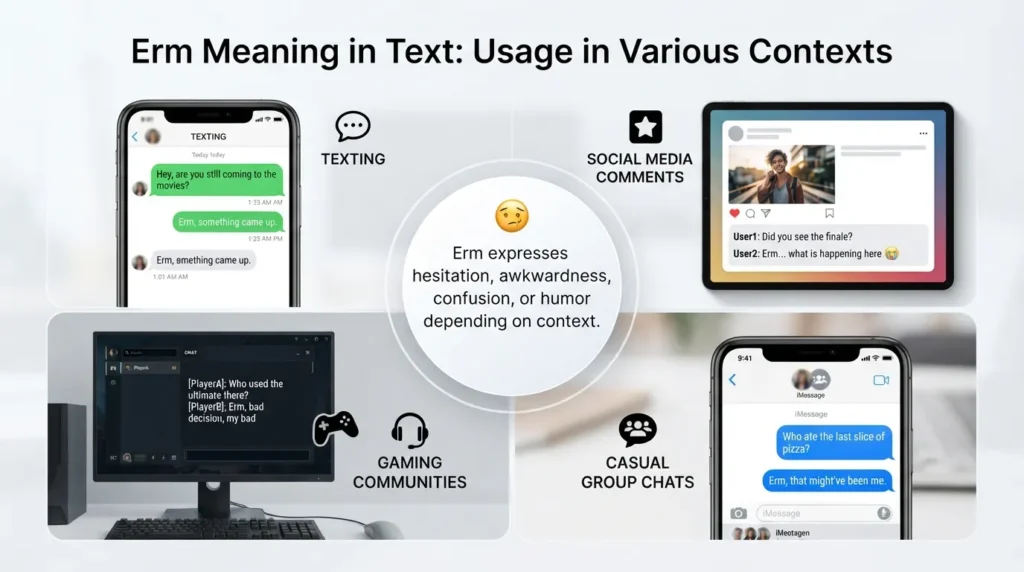
The word “erm” adapts naturally across different types of conversations.
In Texting
Friend: are we still on for tonight?
You: erm, something came up, can we reschedule?
In Social Media Comments
Under a confusing or bold post, someone might comment: “erm… what is happening here 😭”
In Gaming Communities
Teammate: why did you run into the enemy team alone?
You: erm, bad decision, my bad
In Casual Group Chats
Friend 1: who ate the last slice of pizza?
Friend 2: erm, that might’ve been me
In each case, “erm” softens the message, adds hesitation, or injects a bit of humor into an otherwise straightforward statement.
Common Misconceptions & Clarifications
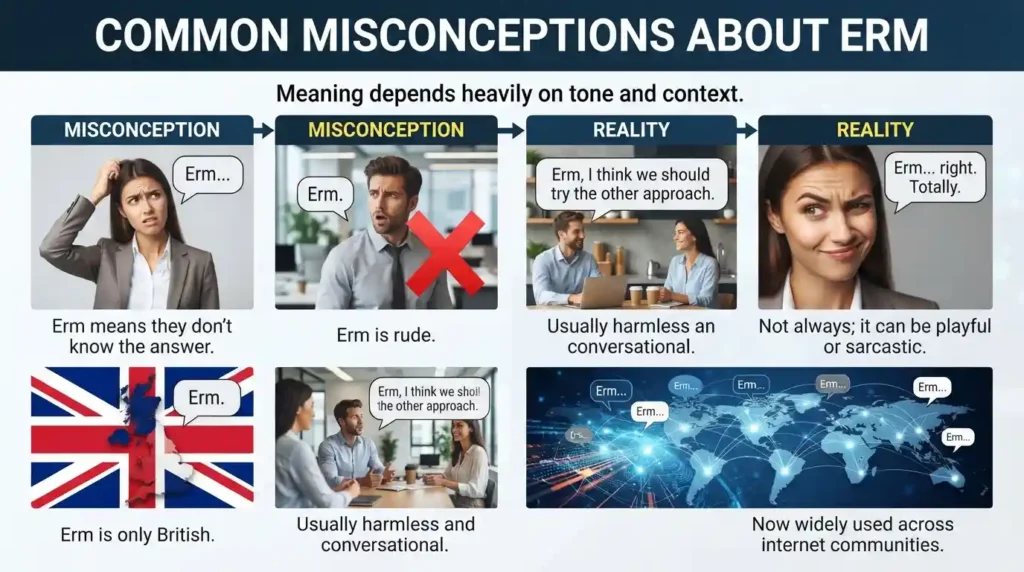
One common misconception is that “erm” always signals genuine confusion. In reality, it’s often used playfully or sarcastically rather than literally.
Misconception 1: “Erm” means the person doesn’t know the answer.
Not always true. Sometimes it’s used for comedic effect or to soften an uncomfortable truth, even when the person knows exactly what they want to say.
Misconception 2: It’s rude or dismissive.
While it can sound hesitant, it’s rarely intended as rude. Most of the time, it simply reflects a natural pause or mild awkwardness.
Misconception 3: It’s only used by British speakers.
Though it originated in British English, “erm” is now widely used across English-speaking internet communities worldwide, especially in memes and casual texting.
Clarification: The meaning of “erm” depends heavily on tone and context. It can express genuine hesitation, playful sarcasm, mild disagreement, or comedic awkwardness, all within the same short word.
Similar Terms & Alternatives
Several other filler words carry a similar meaning to “erm.” Here’s how they compare:
| Term | Meaning | Tone |
| Erm | Hesitation, confusion, mild awkwardness | Casual, sometimes sarcastic |
| Um | General hesitation before speaking | Neutral, thoughtful |
| Uh | Quick pause or uncertainty | Casual, spontaneous |
| Hmm | Thoughtful consideration | Reflective |
| Well… | Leading into a hesitant or complicated answer | Cautious, drawn-out |
While these terms overlap, “erm” often carries a slightly more expressive or dramatic tone, especially in written form, making it popular for humor and reaction-based texting.
How to Respond to This Term
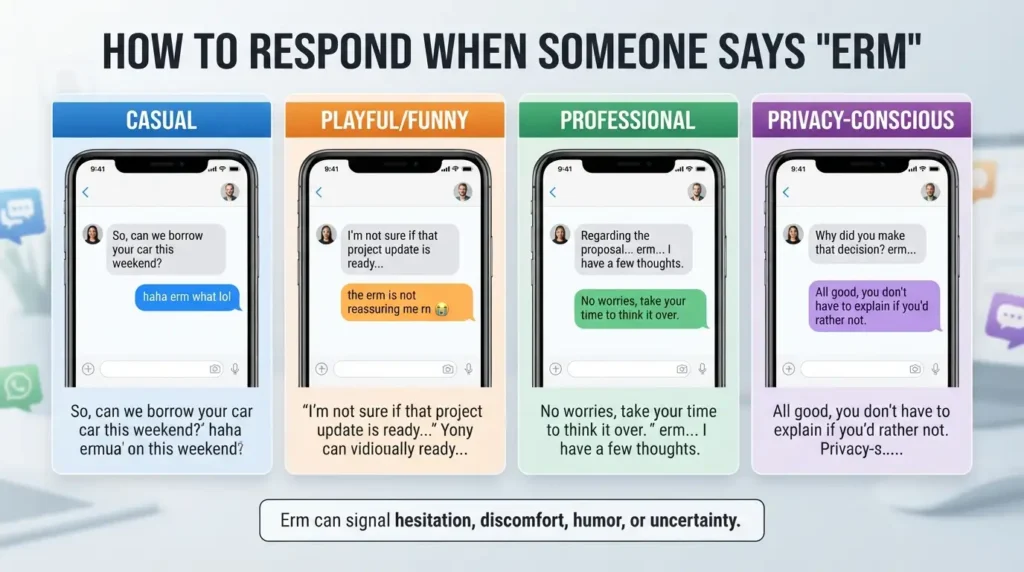
If someone texts you “erm,” your response should match the tone of the conversation.
Casual Response
“haha erm what lol”
Playful/Funny Response
“the erm is not reassuring me rn 😭”
Professional Response (in workplace chats)
“No worries, take your time to think it over.”
Privacy-Conscious Response (if the hesitation suggests discomfort)
“All good, you don’t have to explain if you’d rather not.”
Reading the emotional tone behind “erm” helps you respond appropriately, whether it calls for humor, patience, or reassurance.
Regional or Cultural Differences
“Erm” has strong roots in British English, where it’s used constantly in everyday spoken and written conversation.
- United Kingdom: Extremely common, both in speech and texting, often paired with dry humor or sarcasm.
- Australia: Frequently used in casual conversations, similar to British usage.
- United States: Less common traditionally, where “um” or “uh” are more standard, but “erm” has grown popular through internet culture and memes.
- Non-English-speaking regions: Increasingly adopted among younger, internet-savvy users exposed to English-language memes and social media trends.
While the core meaning stays consistent, the “erm” spelling itself has become something of an internet-wide symbol for awkward or humorous hesitation, regardless of regional origin.
Comparison with Similar Terms
To clarify how “erm” differs from related expressions:
| Expression | Primary Use | Sounds Sarcastic? | Common Region |
| Erm | Hesitation, mild awkwardness | Often | UK, global internet culture |
| Um | Genuine pause before speaking | Rarely | US, global |
| Uh | Quick uncertainty | Rarely | US, global |
| Well… | Leading into a complicated answer | Sometimes | Global |
The key difference is that “erm” tends to carry more personality and humor in written form, often used deliberately for comedic or sarcastic effect rather than pure hesitation.
Usage in Online Communities & Dating Apps
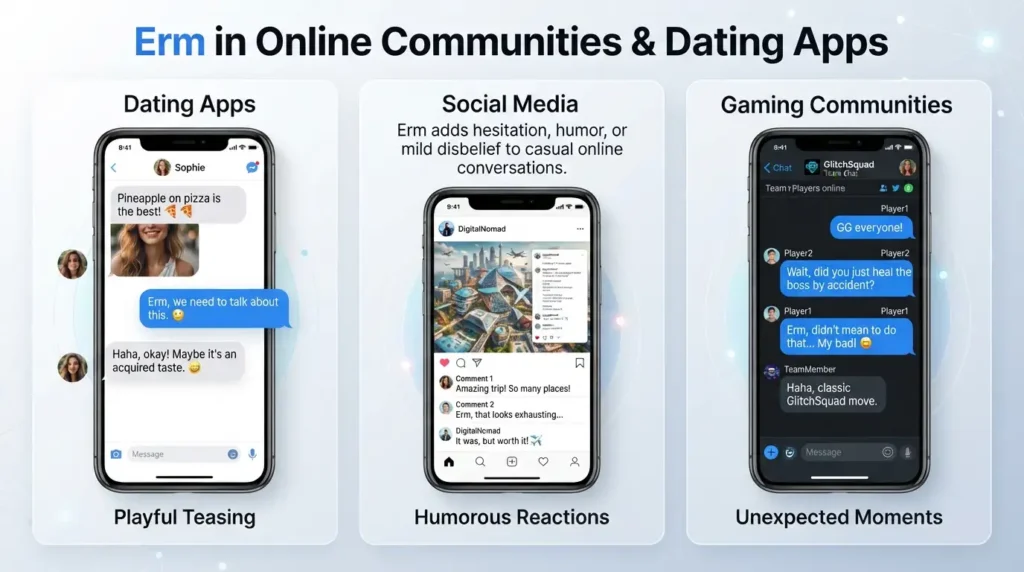
On dating apps like Tinder, Bumble, or Hinge, “erm” often appears in playful or teasing responses.
Example:
Match: I think pineapple belongs on pizza
You: erm, we need to talk about this
On Twitter/X, “erm” frequently shows up in reaction posts or replies to confusing or bold statements, often paired with humor or disbelief.
In gaming communities, “erm” is commonly used to react to unexpected or awkward moments during gameplay.
Tips for responding appropriately:
- On dating apps, use “erm” to add playful teasing without sounding harsh.
- In social media replies, it works well for lighthearted reactions to surprising content.
- In gaming chats, it’s ideal for reacting to funny or unexpected in-game moments.
Hidden or Offensive Meanings
For the most part, “erm” is harmless and expressive. However, tone can shift its impact slightly:
- Passive-aggressive undertone: When used before correcting someone, “erm” can imply mild judgment or disbelief.
Friend: I think the earth is flat
You: erm, no
- Dismissive tone: In rare cases, repeated or exaggerated use of “erm” can come across as mocking, especially if paired with sarcasm.
Why tone and context matter: Since “erm” doesn’t have an inherently negative meaning, misreading it as rude or dismissive often depends on the surrounding conversation rather than the word itself.
Suitability for Professional Communication
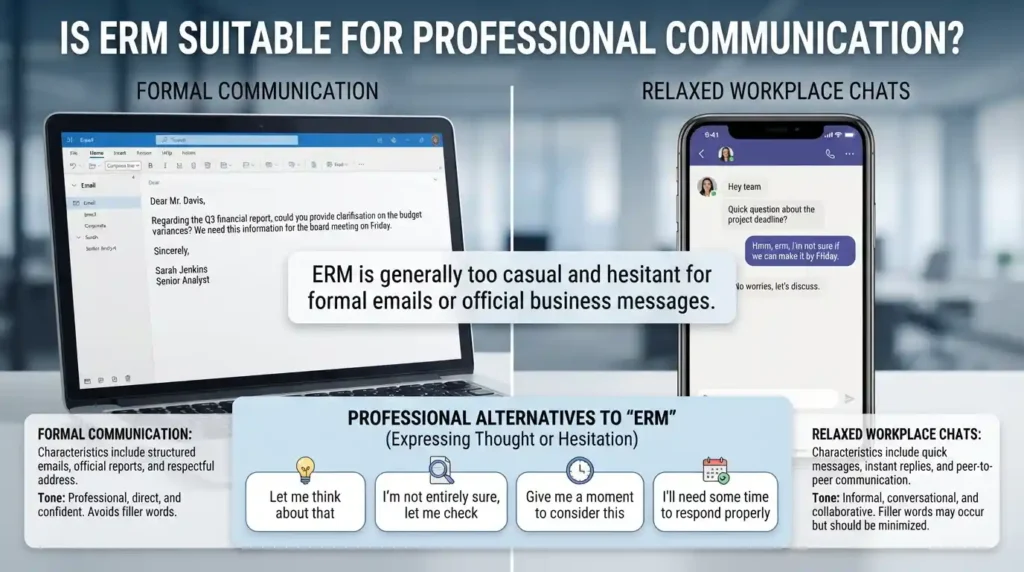
“Erm” is generally not appropriate for formal professional communication, such as client emails or official business messages. It reads as too casual and hesitant for formal settings.
However, in relaxed workplace chats among close colleagues, it may occasionally appear without seeming unprofessional.
Professional alternatives:
- “Let me think about that.”
- “I’m not entirely sure, let me check.”
- “Give me a moment to consider this.”
- “I’ll need some time to respond properly.”
If unsure, it’s safer to avoid casual filler words like “erm” in formal writing and opt for clear, direct language instead.
FAQs
1. What does “erm” mean in texting?
It’s a filler word expressing hesitation, confusion, or a brief pause before responding.
2. Is “erm” the same as “um”?
They’re similar, but “erm” often carries a more expressive or sarcastic tone in written form.
3. Is “erm” rude to use?
Not usually. It’s mostly harmless, though tone and context can occasionally make it feel dismissive.
4. Where did “erm” originate?
It comes from British English as a spoken filler word, later adopted into texting and internet culture.
5. Can “erm” be used sarcastically?
Yes, it’s often used to express mild disbelief or playful pushback in casual conversations.
6. Is “erm” appropriate for professional settings?
Generally no, it’s better suited for casual conversations rather than formal communication.
7. Why do people use “erm” instead of typing a full sentence?
It naturally mimics spoken hesitation, adding emotional tone and personality to text-based conversations.
Conclusion
“Erm” is a simple yet expressive filler word used to convey hesitation, confusion, or playful sarcasm in text conversations. Its meaning depends heavily on tone and context, making it a versatile addition to casual digital communication.
While not suited for formal settings, “erm” adds personality and emotional nuance to everyday texting, social media, and online interactions. Understanding its subtle shades of meaning helps you use it naturally and interpret it correctly when others send it your way.
Discover More Article

Hello, I’m Insha, a passionate content writer with 2 years of experience creating clear, engaging, and helpful content. I specialize in the meaning niche, explaining words, slang, phrases, and online terms in simple language that readers can easily understand and use.