You’re scrolling through a group chat or Twitter reply, and someone drops 👁👄👁 with no caption. No words, just three symbols staring back at you. It somehow perfectly captures a mood shock, awkwardness, secondhand embarrassment without saying a single word.
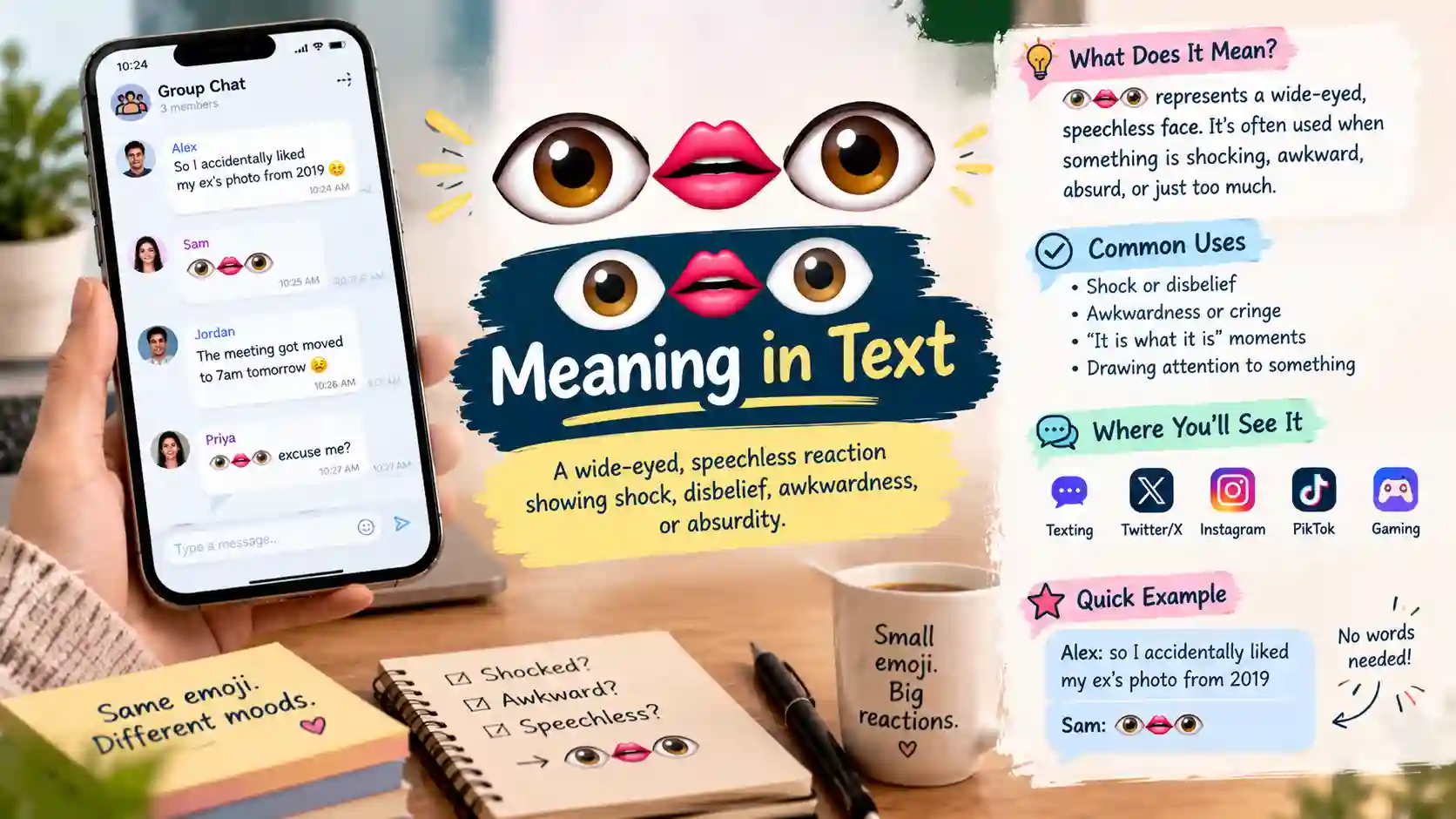
👁👄👁 is one of the internet’s most iconic emoji combinations, built from two eye emojis and a mouth emoji arranged to form a wide-eyed, speechless face. It shows up constantly in texting, Twitter/X threads, Instagram comments, TikTok captions, and gaming chats whenever someone wants to react to something absurd, shocking, or just too much.
Understanding this emoji combo matters because it’s become shorthand for a very specific emotional reaction one that’s hard to put into words but instantly recognizable once you know it. This guide breaks down exactly what 👁👄👁 means, where it came from, and how to use it (or respond to it) the right way.
👁👄👁 Meaning In Text: Definition & Meaning
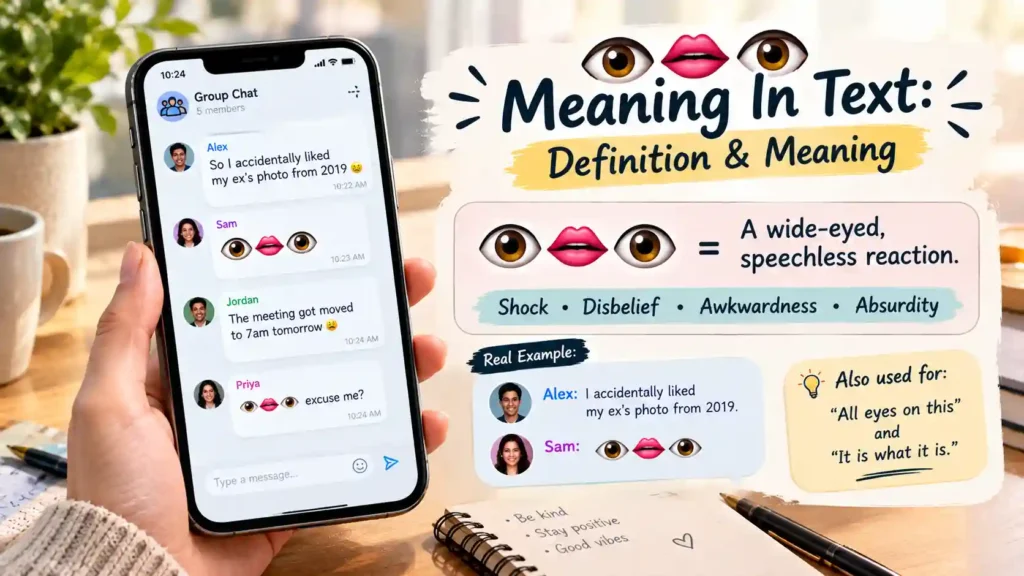
👁👄👁 represents a wide-eyed, speechless face a visual stand-in for reactions like shock, disbelief, awkwardness, or “I saw something I wasn’t prepared for.” It’s often paired with (or used instead of) the phrase “it is what it is,” especially when reacting to something chaotic, absurd, or mildly disturbing that you can’t quite explain.
It can also mean:
- “All eyes on this” drawing attention to something notable.
- Speechless shock when words genuinely fail.
- Playful awkwardness reacting to cringe or secondhand embarrassment.
Real-life examples:
Alex: so I accidentally liked my ex’s photo from 2019
Sam: 👁👄👁
Here, it captures speechless secondhand embarrassment.
Jordan: the meeting got moved to 7am tomorrow
Priya: 👁👄👁 excuse me?
Here, it signals shocked disbelief.
Group chat: guess who just got engaged 👀
Reply: 👁👄👁 wait WHAT
Here, it reacts to unexpected, big news.
Unlike a lot of texting abbreviations, this emoji combo doesn’t need surrounding words to land the visual itself carries the emotional tone.
Background & History of 👁👄👁 Meaning In Text
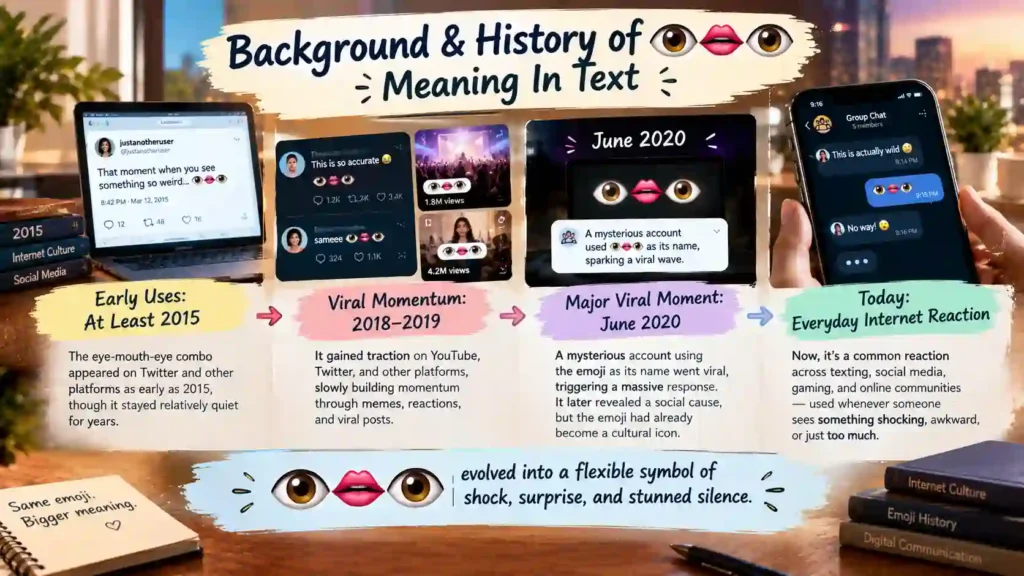
The eye-mouth-eye combination has roots stretching back further than most people realize. Early uses date back to at least 2015 on Twitter, though it existed quietly for years before catching mainstream attention. It slowly built momentum through 2018 and 2019 on platforms like YouTube and Twitter, where Urban Dictionary entries around early 2020 defined it as expressing shock or surprise.
The combo truly exploded in June 2020, when a mysterious account using the emoji as its name went viral on Twitter, promising an unspecified announcement. The mystery paired with the emoji’s instantly recognizable “stunned silence” energy sent it across the platform overnight. The account later revealed itself as a platform supporting racial justice donations, but by then, 👁👄👁 had already cemented itself as a cultural symbol independent of that specific campaign.
Since then, it’s settled into everyday internet use as a flexible reaction emoji no longer tied to any single event, but permanently associated with the feeling of witnessing something you don’t quite know how to respond to.
Understanding 👁👄👁 Meaning In Text Across Different Platforms
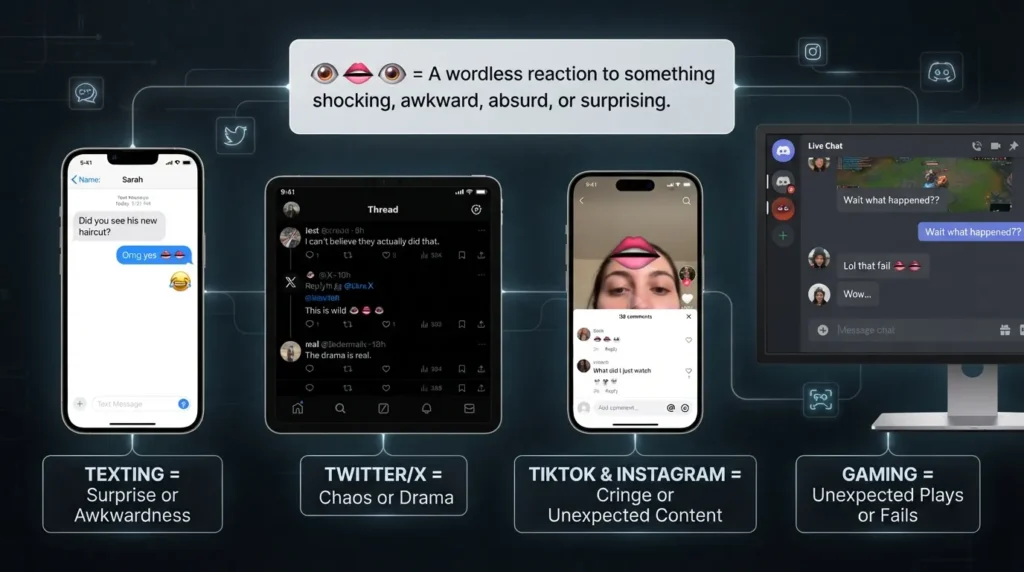
In texting, it usually reacts to something surprising or awkward shared in conversation:
Tia: I may have sent that text to the wrong group chat
Nao: 👁👄👁
On Twitter/X, it’s a go-to reply to chaotic threads, drama, or unbelievable news:
Reply: 👁👄👁 the replies to this tweet are unhinged
On TikTok and Instagram, it appears in captions or comments reacting to cringe, plot twists, or unexpected content:
Comment: 👁👄👁 why is this so accurate
In gaming chat, it can react to an unexpected play, a shocking loss, or an awkward moment in voice chat:
Player1: I just teamkilled by accident
Player2: 👁👄👁
Across every platform, the emoji functions the same way: a wordless reaction to something that leaves you stunned, amused, or quietly judging.
Common Misconceptions About 👁👄👁 Meaning In Text
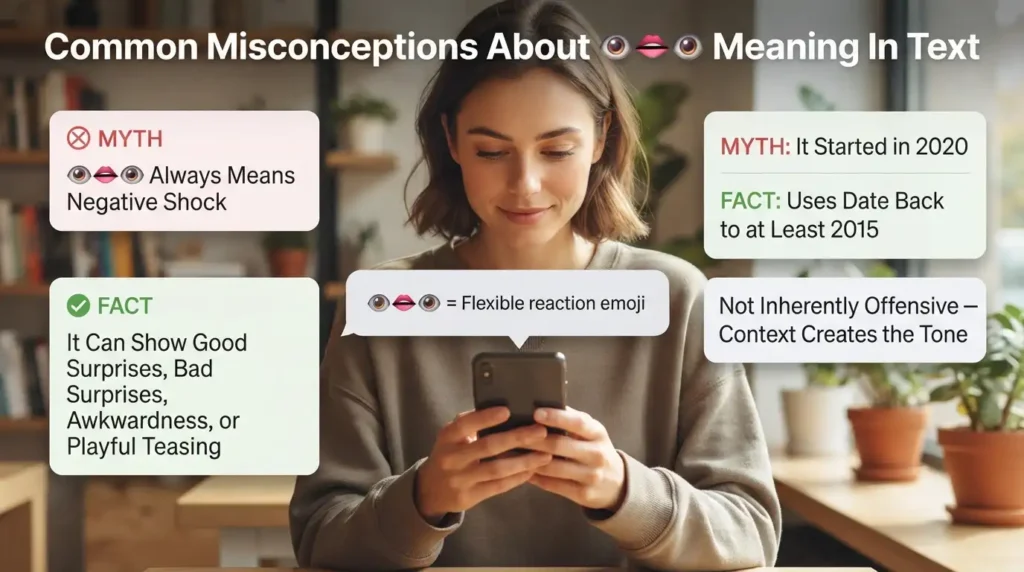
A common misconception is that 👁👄👁 always means shock in a negative sense. In practice, it’s flexible it works for good surprises, bad surprises, awkward moments, and even playful teasing. Tone comes entirely from context.
Another misunderstanding: assuming it’s tied exclusively to the 2020 viral moment. While that event boosted its popularity dramatically, the emoji combo predates that campaign and has since detached from it completely most people using it today have no connection to or awareness of that origin story.
It’s also worth clarifying: 👁👄👁 isn’t inherently offensive. It’s a reaction emoji, similar in spirit to a shrug or a raised eyebrow. Any negative reading comes from the message it’s paired with, not the symbols themselves.
Similar Terms & Alternatives to 👁👄👁 Meaning In Text
| Term/Emoji | Meaning | Typical Use |
| 👁👄👁 | Speechless shock / “it is what it is” | Reacting to something absurd or awkward |
| 😳 | Flushed, embarrassed shock | Similar stunned reaction |
| 🙃 | Ironic acceptance | “It is what it is,” lighter tone |
| 👀 | Watching, curious, or suspicious | Drawing attention or implying drama |
| 😐 | Deadpan, unimpressed | Flat reaction to something underwhelming |
| ¯\(ツ)/¯ | Shrug, indifference | Classic “nothing I can do” reaction |
If you want the same energy without the emoji, phrases like “I have no words” or “well, that happened” carry a similar tone.
How to Respond When Someone Uses 👁👄👁 Meaning In Text
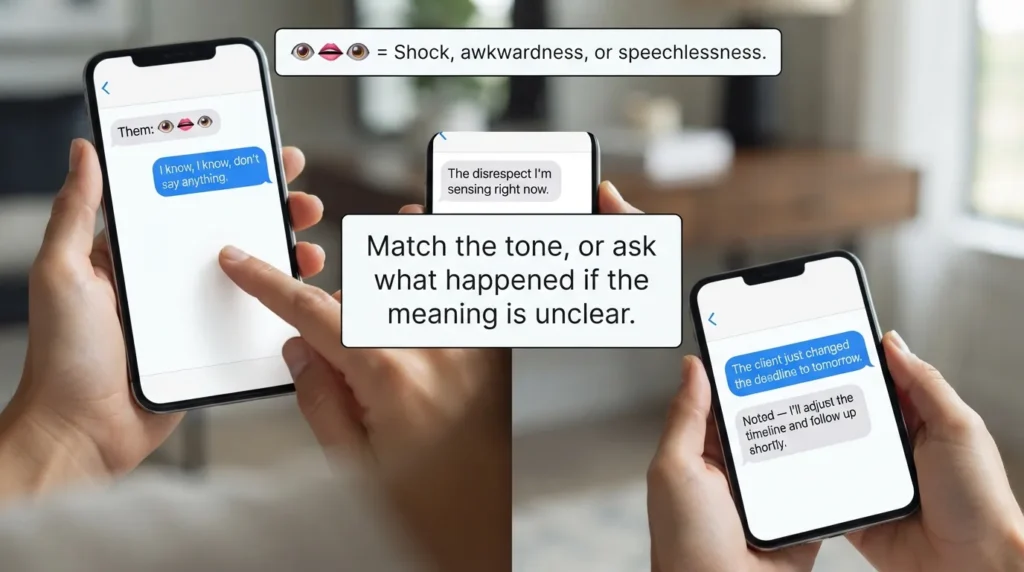
Casual reply:
Them: 👁👄👁
You: I know, I know, don’t say anything
Funny/playful reply:
Them: 👁👄👁
You: the disrespect I’m sensing right now
Professional context (rare best avoided, but informally in a casual work chat):
Them: the client just changed the deadline to tomorrow
You: Noted I’ll adjust the timeline and follow up shortly.
Privacy-conscious or unsure reply:
You: lol what happened?? that emoji is not reassuring
Since the emoji doesn’t explain itself, asking a quick follow-up question is often the most natural response.
Regional & Cultural Differences in 👁👄👁 Meaning In Text
👁👄👁 is a genuinely global emoji combo, since emojis don’t require translation the way text slang does. It gained its biggest cultural momentum through English-language Twitter/X and TikTok communities, particularly in the US, but its meaning transfers easily across languages because the visual wide eyes, an open or flat mouth reads as “shock” or “speechlessness” almost universally.
That said, recognition and frequency of use still skew toward younger, internet-native users globally, regardless of language, since it’s tied closely to meme culture rather than formal language conventions.
Comparison with Similar Reaction Emojis
| Emoji | Emotional Tone | Best Used For |
| 👁👄👁 | Stunned, speechless | Absurd, chaotic, or awkward moments |
| 😳 | Embarrassed, flustered | Personal embarrassment or flirtation |
| 🙃 | Wry, accepting | Mild frustration with a shrug |
| 😐 | Flat, unimpressed | Deadpan reactions |
| 👀 | Curious, watching | Implying drama or suspicion |
The key difference: 👁👄👁 specifically captures speechlessness, while emojis like 👀 imply active curiosity or anticipation rather than shock.
Usage in Online Communities & Dating Apps
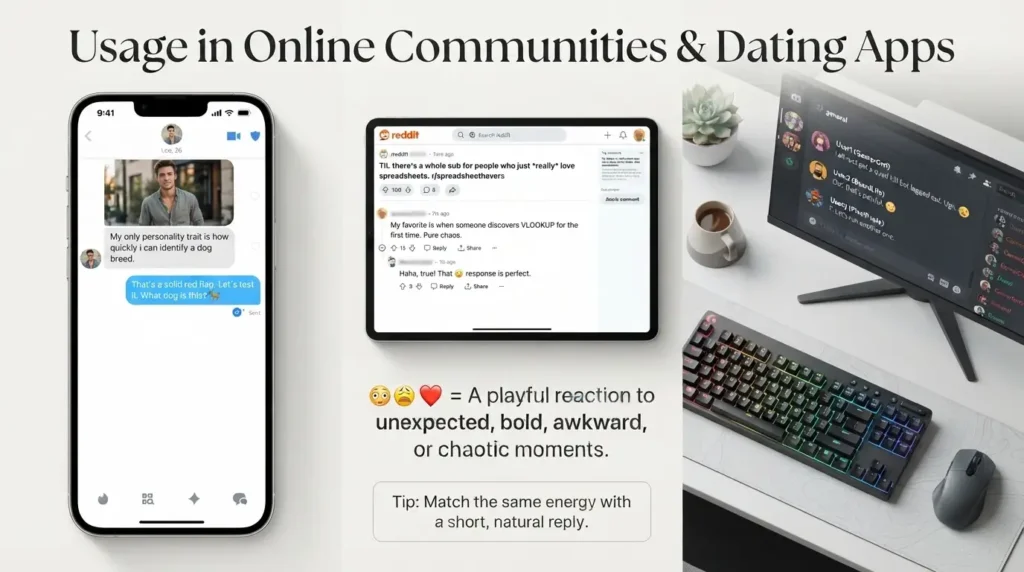
On dating apps like Tinder or Bumble, 👁👄👁 sometimes shows up as a playful reaction to an unexpected or bold bio line or opening message:
Match: my red flag is I’ll fight you at bowling
You: 👁👄👁 noted, staying on your good side
On Twitter/X, it’s a staple reply in viral threads and drama-related conversations. In gaming communities, it reacts to unexpected plays, fails, or chaotic in-game moments.
Tip for responding appropriately: treat it as an invitation to react, not necessarily explain matching the same energy (a short, punchy reply) usually keeps the tone consistent.
Hidden or Offensive Meanings Behind 👁👄👁
👁👄👁 doesn’t carry a widely recognized offensive meaning. It’s a reaction emoji, not an insult, and its meaning stays consistent across most contexts: shock, awkwardness, or speechlessness.
That said, tone still depends on what it’s paired with. Used alone in response to someone’s bad news, it can come across as dismissive rather than sympathetic, simply because it doesn’t offer comfort the way words might. Pairing it with a follow-up message usually keeps the tone warmer and clearer.
Is 👁👄👁 Suitable for Professional Communication?
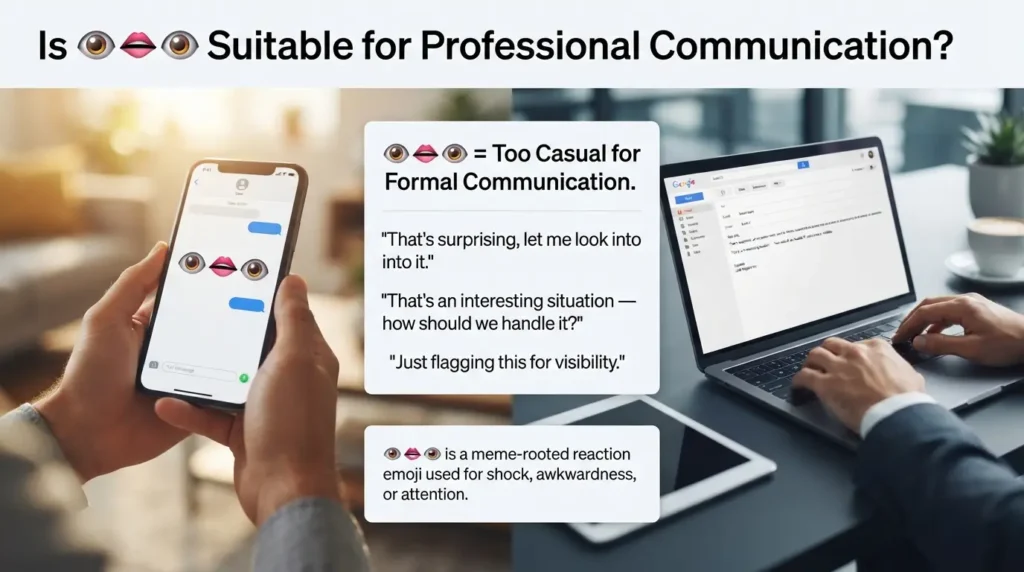
No 👁👄👁 is not appropriate for formal or professional communication. It’s meme-rooted internet shorthand, far too casual for emails, official messages, or client-facing conversations.
Professional alternatives depending on intended meaning:
- Instead of 👁👄👁 (shock) → “That’s surprising, let me look into it.”
- Instead of 👁👄👁 (awkwardness) → “That’s an interesting situation how should we handle it?”
- Instead of 👁👄👁 (attention) → “Just flagging this for visibility.”
In professional settings, spelling out the reaction always reads as more polished and appropriate.
FAQs
1. What does 👁👄👁 mean in text?
It represents a speechless, wide-eyed reaction to something shocking, awkward, or absurd.
2. Where did 👁👄👁 come from?
It dates back to at least 2015 on Twitter, gaining major viral momentum in June 2020 through a mystery account.
3. Is 👁👄👁 the same as “it is what it is”?
They’re closely associated, though the emoji is used more broadly for shock and speechlessness generally.
4. Is 👁👄👁 offensive?
No, it’s a neutral reaction emoji any negative tone comes from context, not the symbols themselves.
5. Can I use 👁👄👁 in a professional email?
No, it’s far too casual for formal communication.
6. What’s the difference between 👁👄👁 and 👀?
👁👄👁 signals shock or speechlessness, while 👀 signals curiosity or watching for drama.
7. Is 👁👄👁 still commonly used?
Yes, it remains a popular reaction emoji across texting, Twitter/X, TikTok, and gaming chat.
Conclusion
👁👄👁 has become one of the internet’s most recognizable reaction emojis a wordless way to express shock, awkwardness, or speechlessness across texting, social media, and gaming chat. Its journey from a quiet 2015 tweet to a viral 2020 moment cemented it as internet shorthand for “I have no words, but I felt that.” It’s playful, flexible, and universally understood, but stays firmly in casual territory never appropriate for professional communication. When you see it, the safest bet is simple: match the energy, or just ask what happened.
Discover More Article

Hello, I’m Insha, a passionate content writer with 2 years of experience creating clear, engaging, and helpful content. I specialize in the meaning niche, explaining words, slang, phrases, and online terms in simple language that readers can easily understand and use.