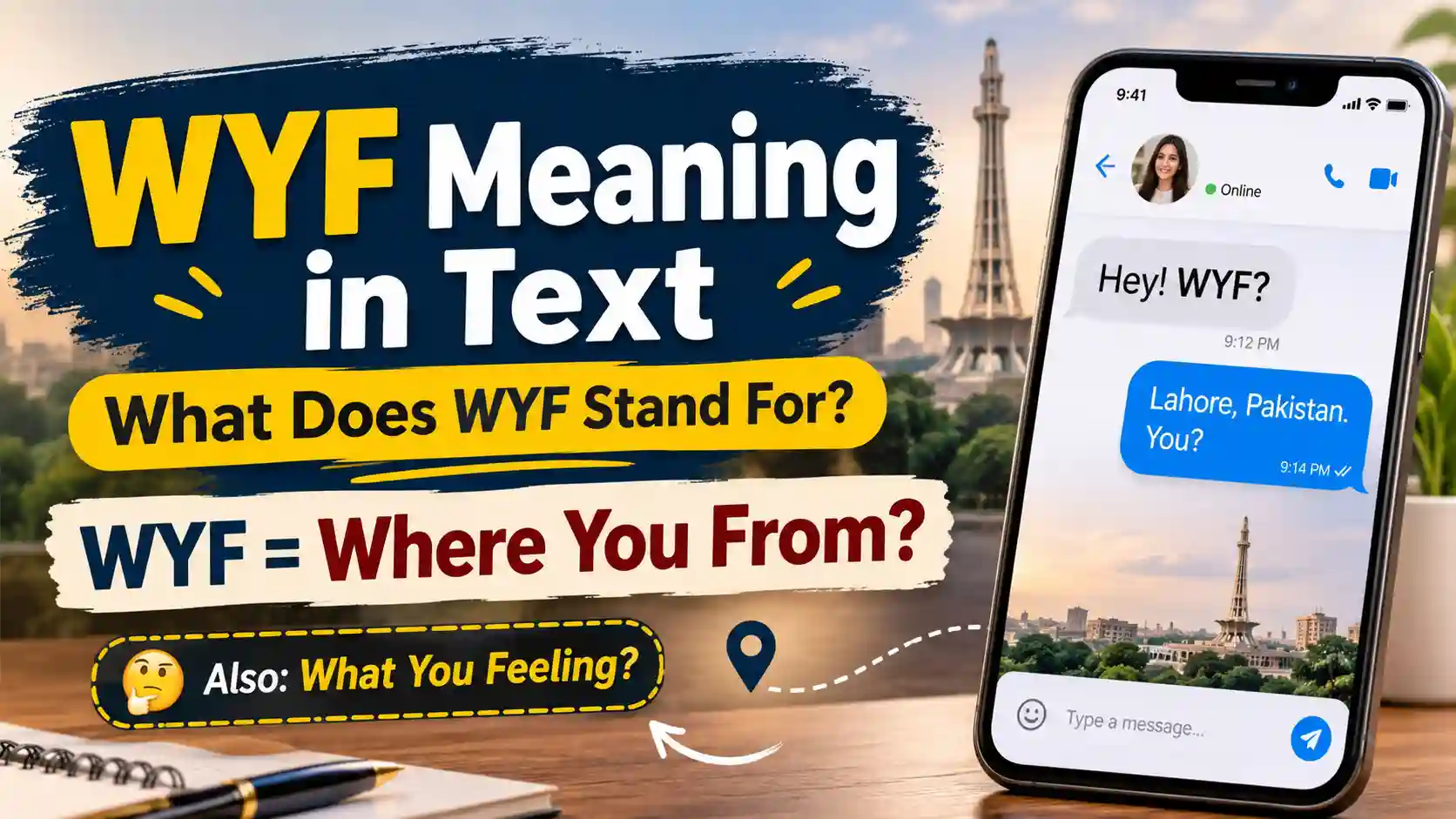
You open your phone and see a message that reads, “wyf?” No greeting, no context, just three letters. Is it a typo? A joke? Something you should answer right away? If you’ve paused over a message like this, you’re not alone.
WYF meaning in text: WYF most commonly stands for “Where you from?” It’s a casual way to ask about someone’s hometown, country, or location. In some chats it can also mean “What you feeling?”, so the conversation around it matters.
Text slang moves fast, and one abbreviation can carry more than one meaning. In this guide, you’ll learn what WYF means, how to tell which meaning someone intends, how to reply, and when to use it yourself. You’ll also find examples, common mistakes, and similar slang terms worth knowing.
Quick Definition: WYF
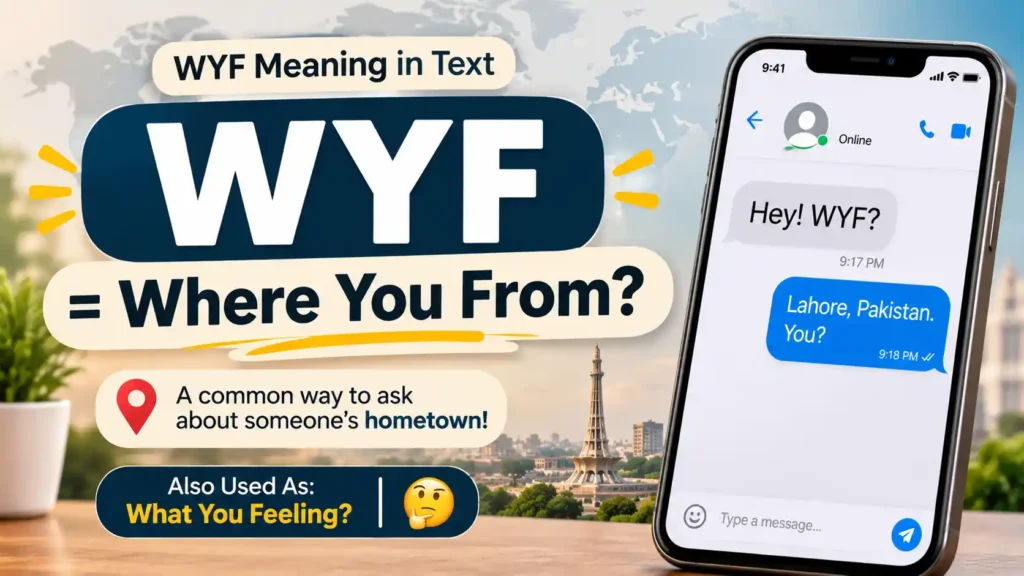
WYF = Where you from? (most common)
Also used as: What you feeling? (less common, depends on context)
Type: Text and social media slang
Tone: Casual, friendly, conversational
Where you’ll see it: Text messages, Snapchat, Instagram, TikTok, and dating apps
Formal or informal: Informal. Skip it in work emails and professional messages.
What Does WYF Mean? The Full Explanation
The primary meaning: “Where you from?”
WYF is most often shorthand for “Where you from?” The sender wants to know your hometown, your country, or the area where you live. It usually appears early in a conversation, especially between people who have just met on Snapchat, Instagram, TikTok, or a dating app.
The phrase is already informal. In full, it would be “Where are you from?”, but “are” is dropped in casual speech, and WYF compresses the question even further.
Is WYF an acronym or an abbreviation?
Strictly speaking, WYF is an initialism: each letter stands for a word (Where You From), and people read it letter by letter. Most people simply call it an abbreviation or text slang, which is fine for everyday use.
How do you say it?
Mostly, you don’t. WYF lives in writing. If someone does say it aloud, they’d spell it out as “W-Y-F” or just ask the full question.
Tone and connotation
WYF is relaxed and friendly. It signals curiosity rather than interrogation, though tone depends on the person and the platform. Between friends, it’s a quick icebreaker. From a stranger, it may read as a casual attempt to start a conversation.
Origin and Background
There’s no verified record of who first typed WYF or when it appeared. Like most text slang, it likely emerged gradually as people shortened common questions to type them faster.
The habit of shrinking phrases grew out of practical limits: small screens and keypads made typing slow, SMS and early social platforms capped message length, and short replies simply feel quick and casual.
WYF follows a familiar formula: keep the key words, drop the filler. “Where are you from?” becomes “Where you from?” and then WYF. The same pattern gave us WYD (What are you doing?), WYA (Where are you at?), and HMU (Hit me up).
Apps built around quick, informal conversation gave these openers a natural home. When two strangers connect, “where you from?” is one of the first things they ask, so it made sense to shorten it.
Other Possible Meanings of WYF
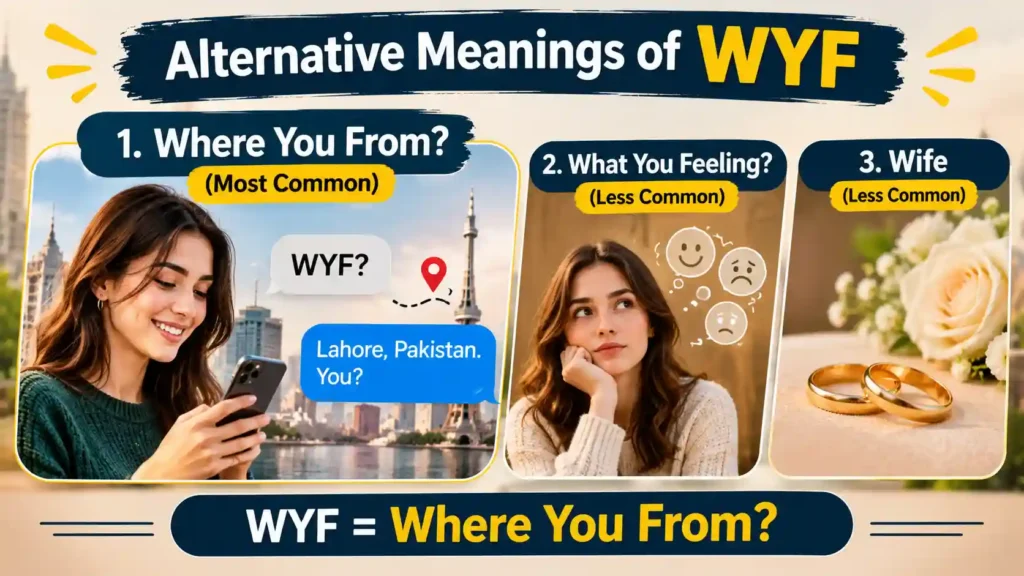
“Where you from?” is the most common reading, but slang rarely stays in one lane. Here are the other meanings you may run into, from more to less likely.
“What you feeling?”
Some sources list this as a second meaning. The sender is asking how you feel about something or what mood you’re in. It tends to appear in friendly chats, usually after you’ve shared something emotional.
“Wife”
Some people type “wyf” as a vowel-dropped spelling of “wife,” especially in captions and casual posts. This is a spelling shortcut rather than an acronym, and it’s less widely documented than the other meanings. Clues like “my wyf” or “the wyf” give it away.
Lookalikes to avoid mixing up
- WYD: What are you doing?
- WYA: Where are you at?
- WYL: What you like? (usage varies)
How to Tell Which Meaning Is Intended
Three letters can carry very different messages, so the surrounding conversation is your best guide.
- Who sent it? A new match or stranger most likely means “Where you from?” A close friend after a rough day might mean “What you feeling?”
- Where does it appear? Early in a chat, think location. After you’ve shared news or an opinion, think feelings.
- What are the nearby words? “my wyf” or “the wyf” points to “wife.”
- What’s the tone? Playful emojis suggest friendly curiosity.
Location:
“Hey, cool profile! wyf?” “Lahore, you?”
Feelings:
“I just found out I didn’t get the job.” “Ugh, wyf about it?”
Wife:
“Dinner with the wyf tonight.”
If you can’t tell, just ask: “Do you mean where I’m from?” Asking beats guessing wrong, especially with someone new.
Examples of WYF in Real Use
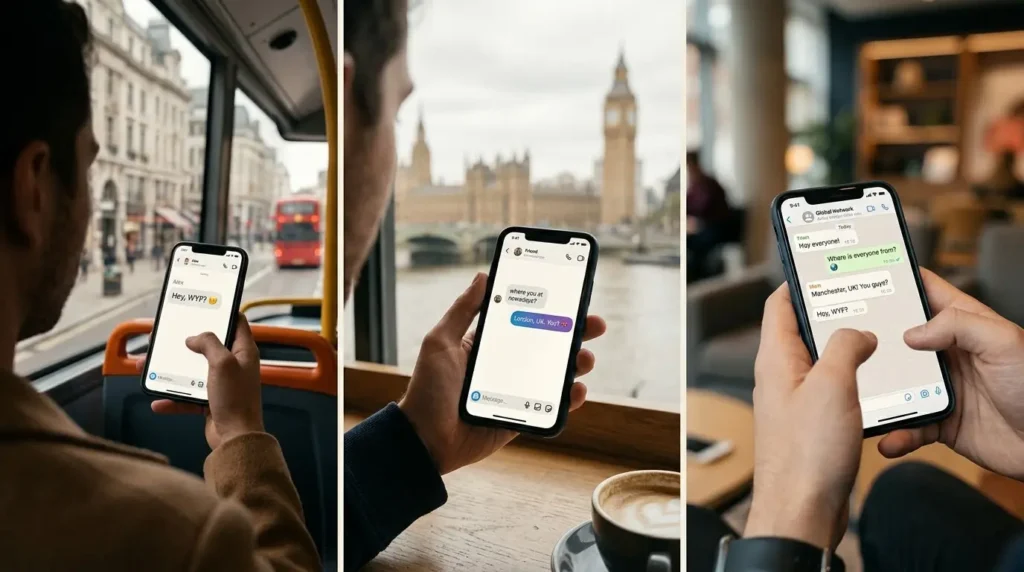
These examples are written for illustration, not quoted from real users.
Text messages
“Hey, saw your story. wyf?” “Toronto! You?” “Karachi originally, now in Dubai.”
“Love your travel pics. wyf?” “Born in Manchester, living in Berlin now.”
“Heard about your exam today. wyf?” “Honestly, relieved it’s over.”
Social media
- Instagram comment: “Gorgeous view! wyf?”
- TikTok comment on an accent video: “Your accent is so interesting, wyf?”
- Caption using the “wife” spelling: “Anniversary dinner with the wyf.”
Group chats and jokes
When someone new joins a group chat, a member might write “Welcome! wyf everyone?” to start introductions. Friends also use it jokingly, answering with a silly reply or pretending to misread it as “wife.”
How to Reply When Someone Texts You WYF
If they mean “Where you from?”
Give your city, region, or country, then ask the question back so it doesn’t feel one-sided.
- “Lahore, Pakistan. You?”
- “Born in Manchester, living in Berlin now. How about you?”
- “I’m from Karachi originally! Have you ever been?”
If you’d rather keep details private, stay general: “Somewhere in Pakistan! What about you?”
If they mean “What you feeling?”
Answer honestly or lighten the mood:
- “Pretty tired, but okay. You?”
- “Honestly nervous about tomorrow.”
If you’re not sure
Ask first: “Wait, is that ‘where you from’ or ‘what you feeling’?”
Reply tips
- Match their tone and emoji style.
- Ask a follow-up to keep the chat balanced.
- Keep personal details general with strangers.
- If the question comes from someone pushy, you don’t have to answer.
How and When to Use WYF Yourself

When it works well
- Chatting with friends
- Meeting new people on Snapchat, Instagram, TikTok, or gaming chats
- Dating apps, as a low-pressure way to ask about location
- Group chats, to start introductions
When to avoid it
- Work emails and professional messages (write “Where are you based?”)
- Academic or formal writing
- Messages to people unfamiliar with slang
- Serious or sensitive conversations, where abbreviations can feel dismissive
Do’s and don’ts
Do match the other person’s style, add a follow-up so it doesn’t feel like an interview, and spell it out if they seem confused.
Don’t use it as your very first message to a total stranger, overuse slang in every sentence, or assume everyone knows the meaning.
Rule of thumb: if you’d comfortably say “Hey, where you from?” in that setting, WYF is probably fine.
WYF vs. Similar Terms
| Term | Meaning | Tone | Best used for |
| WYF | Where you from? | Casual, curious | Icebreakers with new people |
| WYF (alt.) | What you feeling? | Friendly, personal | Checking in on a friend |
| WYD | What are you doing? | Casual | Starting a chat, making plans |
| WYA | Where are you at? | Direct, urgent | Meeting up |
| WRU | Where are you? | Direct | Checking current location |
| HMU | Hit me up | Relaxed | Inviting someone to message |
The key difference is the last letter: F is for from, A is for at, and D is for doing. WYF asks about background, WYA asks where someone is right now, and WYD asks about activity. WYD is much more common, so many people first read WYF as a typo for it.
WYF Across Platforms and Cultures
Slang shifts with the setting. These are general observations, not research findings.
- Snapchat and Instagram: Often an icebreaker in DMs and story replies.
- TikTok: Usually appears in comments, directed at creators.
- Dating apps: A quick way to check location before deeper questions.
- WhatsApp and SMS: More common between people who already know each other.
- Gaming chats: Players may use it to find teammates in the same region.
Younger users are more likely to recognize it, and people who learned English online often pick up slang quickly. Remember that questions about origin can feel personal in some contexts, so don’t push if someone hesitates.
Common Mistakes and Misunderstandings
- Mixing it up with WYD or WYA. Check the last letter before you reply.
- Assuming only one meaning. Read the context before answering.
- Using it in the wrong setting. Keep it out of work and formal messages.
- Assuming everyone knows it. Spell it out if the other person looks confused.
- Oversharing. A country or region is enough when a stranger asks.
- Trusting unreliable explainers. Many sites claim “secret” meanings without sources. Rely on context and trusted slang dictionaries.
Quick Reference: Text Slang Cheat Sheet
| Abbreviation | Meaning |
| WYF | Where you from? |
| WYD | What are you doing? |
| WYA | Where are you at? |
| WRU | Where are you? |
| WBU | What about you? |
| HMU | Hit me up |
| IDK | I don’t know |
| SMH | Shaking my head |
| TBH | To be honest |
| TTYL | Talk to you later |
FAQs
What does WYF mean in text?
WYF most commonly means “Where you from?” It asks about someone’s hometown, country, or location. In some chats it can also mean “What you feeling?”
Does WYF mean anything else?
Sometimes. Besides “Where you from?”, some people use it for “What you feeling?”, and a few type “wyf” as a casual spelling of “wife.” Confirm with the sender if unsure.
Is WYF the same as WYD?
No. WYF asks where someone is from, while WYD asks what they are doing.
Is WYF the same as WYA?
No. WYA means “Where are you at?” and asks about current location.
Is WYF formal or informal?
Informal. It suits casual chats and social media.
Can I use WYF in a professional message?
It’s best to avoid it. Write “Where are you based?” instead.
How do you reply to WYF?
Share your city, region, or country, then ask back: “Lahore, Pakistan. You?”
How do you pronounce WYF?
It’s mostly written. If spoken, people say the letters “W-Y-F.”
Is it safe to answer WYF from a stranger?
Usually, if you stay general. A country or region is enough, and exact addresses should stay private.
Conclusion
WYF may be only three letters, but it shows how much meaning text slang can pack into a tiny space. In most conversations it means “Where you from?”, a quick, friendly way to learn about someone. In others it can mean “What you feeling?”, which is why context always matters.
Read the surrounding messages, consider who’s asking, and reply in a way that fits the tone. If you’re unsure, ask. And save WYF for casual chats, writing out the full question in professional settings.
Bookmark the cheat sheet above for the next abbreviation that stumps you. Which slang term confuses you the most? Tell us in the comments, and we may explain it in our next post.
Discover More Article

Hi, I’m Mahgull, a dedicated content writer with 2 years of experience in the meaning niche. I enjoy turning complex words, slang, abbreviations, and phrases into simple, informative content that helps readers understand their meanings clearly and quickly.